
 admin
December 11, 2025
admin
December 11, 2025
7 Powerful Uses of AI in audio visual integration
AI in audio visual integration is pushing AV systems into an entirely new era, an era where meetings run themselves, rooms respond intelligently, and content delivery becomes effortless.
The shift from traditional AV setups to AI driven environments is not just an upgrade, it’s a complete transformation of how people interact with digital spaces. AI allows AV technology to anticipate user needs, automate routine tasks, optimize performance in real time, and create deeply engaging experiences that once required manual control or technical expertise. As businesses continue to embrace hybrid work, digital transformation, and automation, AI in audio visual integration has become a critical driver of productivity and professional communication.
By merging automation, analytics, and intelligent control, AI is unlocking AV capabilities that were impossible just a few years ago.
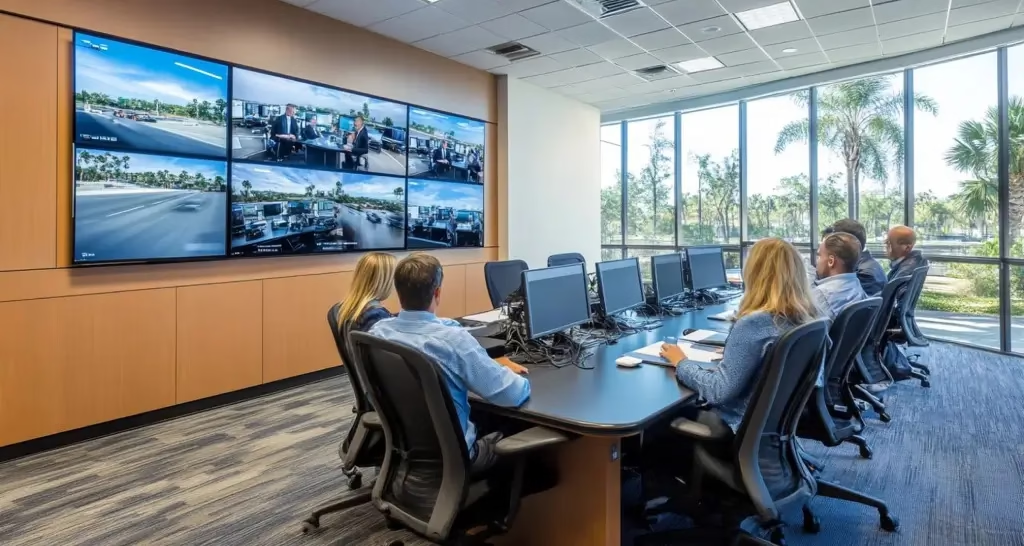
Here are the impactful AI trends shaping the future of modern AV integration:
1. Voice Controlled AV Solutions
AI in audio visual integration is making AV systems far easier to operate by introducing voice assistants that replace traditional remotes, touch panels, and manual controls. Instead of searching for buttons or navigating complicated menus, users can interact with the room naturally simply by speaking. Voice commands now trigger essential AV functions such as starting a meeting, switching display sources, adjusting lighting, controlling volume, or launching collaboration platforms like Teams, Zoom, or Meet.
This level of convenience is especially valuable in fast paced hybrid environments, where smooth meeting flow is critical. Voice control ensures that even non technical users can manage advanced AV setups without hesitation or confusion.
What this enables:
- Hands free meeting control: Ideal for presenters, executives, and hybrid participants who need seamless transitions.
- Faster setup for hybrid teams: Meetings begin instantly without delays caused by manual configuration.
- Reduced technical dependency: Less reliance on IT support, reducing interruptions and improving productivity.
This shift brings a more natural, intuitive, and accessible experience to every meeting room.
2. Smart Room Automation
AI is redefining how meeting rooms operate by combining AI in AV integration with IoT sensors to create fully automated spaces. Instead of waiting for users to set up equipment, the room prepares itself based on occupancy, schedules, and user preferences.
Automation includes:
- Auto adjusting lighting and temperature: Creating a comfortable atmosphere tailored to the meeting type.
- Turning on displays when someone enters: Eliminating delays and offering instant readiness.
- Activating cameras and microphones before meetings: Ensuring everything is ready before participants connect.
- Switching layouts based on participant count: The room adapts whether it’s a small meeting or a large hybrid discussion.
With AI managing these tasks in the background, organizations achieve a consistent, comfortable experience without manual intervention.
3. Automated Meeting Summaries & Briefings
One of the most practical advancements in AI is its ability to support the entire meeting lifecycle from preparation to follow up. Through AV integration, the system captures, organizes, and shares meeting information automatically.
Capabilities include:
- Auto generated meeting briefs: AI reviews previous discussions and agendas for smooth context.
- Real time transcription: Every word is recorded accurately for future reference.
- Summaries with action items: AI identifies decisions and next steps instantly.
- Automatic email follow ups: Participants receive detailed summaries without any effort.
This reduces administrative tasks and keeps teams aligned, especially in busy, fast moving environments.
4. AI Enhanced Camera Tracking
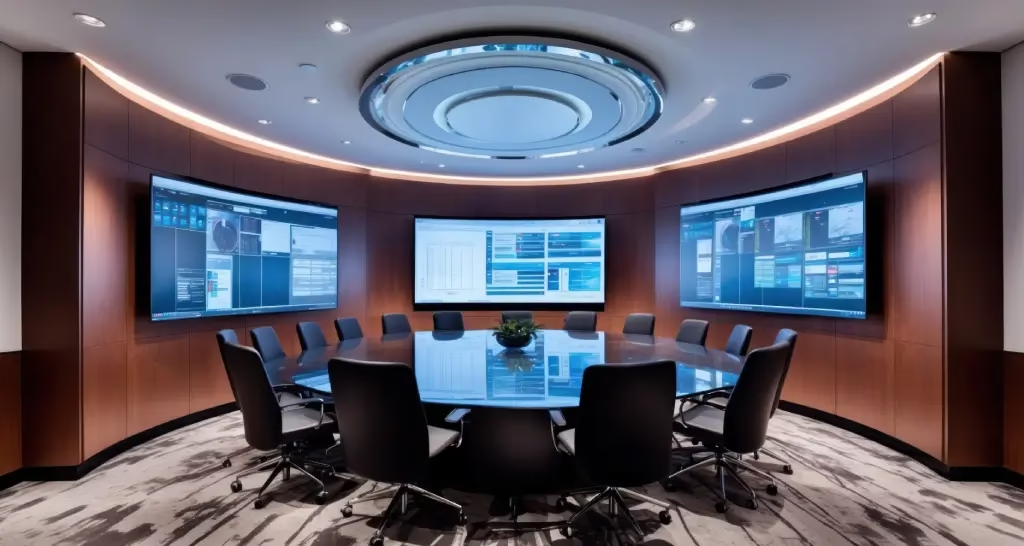
AI in audio visual integration has introduced intelligent camera systems that can identify speakers, track movement, and adjust framing automatically. This eliminates the need for manual adjustments or dedicated camera operators.
Key improvements:
- Speaker detection: The camera focuses on whoever is talking.
- Auto framing for groups or individuals: Ensures the perfect composition during presentations or team discussions.
- Smooth transitions during hybrid meetings: Changes are subtle and professional, reducing visual distraction.
This enhances engagement for both in room participants and remote attendees, creating a more inclusive experience.
5. Advanced AI Audio Processing
Audio clarity is essential in hybrid communication, and AI significantly improves this area. Audio Visual integration allows the system to process sound in real time, fixing issues that used to interrupt meetings.
AI audio enhancements:
- Background noise suppression: Removes typing, fans, traffic, and chatter.
- Echo and reverb control: Essential for large rooms or glass heavy spaces.
- Auto gain adjustment: Maintains consistent voice levels no matter where someone is seated.
- Clarity boosting: Enhances speech for remote participants and recordings.
This results in clear, natural conversations that support productive communication across distributed teams.
6. Predictive Maintenance & Remote Monitoring
One of the most valuable benefits of AI in audio visual integration is predictive maintenance. Instead of reacting to issues, the system continuously monitors device health and alerts teams before a problem affects the meeting.
AI can detect:
- Early signs of hardware malfunction: Subtle performance drops are flagged quickly.
- Network instability: Prevents lag, freezing, or disconnects during meetings.
- Camera or microphone issues: AI identifies unusual patterns or quality drops.
- Overheating or power faults: Helps avoid sudden system shutdowns.
This proactive approach minimizes downtime, reduces service costs, and keeps AV environments running reliably.
7. Smart Content & Display Management
AI in audio visual integration also improves how content is presented on displays. creens can automatically select the most suitable layout and adjust visuals in real time based on what’s happening in the room.
Capabilities include:
- Automatic layout switching based on who’s speaking: Perfect for hybrid collaboration.
- Multilingual captions in real time: Supports global communication and accessibility needs.
- Recommended templates depending on meeting type: Helps presenters deliver clear, structured content.
- Personalized content when specific users enter: Displays greet users or load their preferred settings.
This creates a polished, professional experience in every session without the need for manual configuration.
AI in audio visual integration is no longer just a nice to have, it has become essential for modern communication and collaboration. With intelligent automation, improved audio and video performance, and proactive system management, AI enables teams to work more efficiently while minimizing technical disruptions.
References
AVIXA — A Practical Guide to Integrating AI into AV