
 admin
December 18, 2025
admin
December 18, 2025
PAVA System in Airport: 6 Key Applications & Components
Airports are among the most complex public infrastructures in the world. Thousands of passengers move through terminals every hour, flights operate on tight schedules, and safety regulations leave no room for error. In such an environment, clear, reliable, and intelligent communication is not optional it is mission critical. This is where a PAVA system in airport environments plays a decisive role.
A Public Address and Voice Alarm (PAVA) system is far more than a loudspeaker setup. It is a life safety and operational communication backbone that supports daily announcements, emergency evacuation, regulatory compliance, and passenger experience. This blog explores how PAVA systems enhance both airport safety and operational efficiency, and why modern airports cannot function without them.
What Is a PAVA System and How Is It Used in Airports?
A PAVA system, also known as a Public Address and Voice Alarm system, is an advanced audio communication solution designed to deliver both live and pre recorded voice messages across large and complex environments. Unlike conventional public address systems, PAVA systems are specifically engineered to meet stringent fire safety and emergency communication standards, ensuring clear and intelligible messaging even during critical situations.
In airport environments, PAVA systems are integrated with multiple operational and safety platforms, including:
- Fire detection and alarm systems
- Building Management Systems (BMS)
- Airport operations and information databases
- Emergency response and evacuation protocols
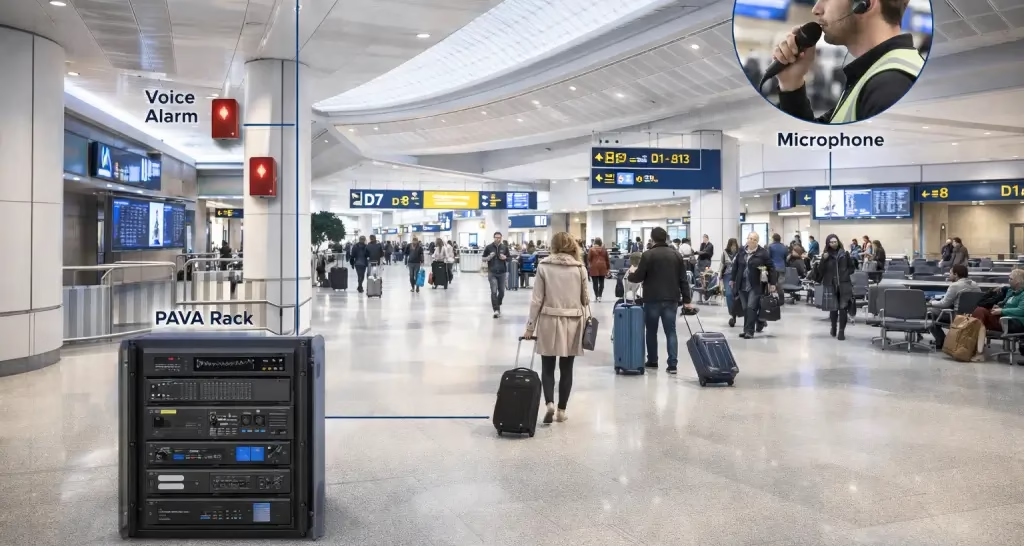
This level of integration enables airports to automatically activate voice evacuation messages during emergencies while continuing to support daily operational announcements such as boarding information, gate changes, security notifications, and passenger guidance.
Why PAVA System in Airport?
Airports require a communication system that prioritizes safety, clarity, and operational control in highly dynamic and noise intensive environments. A PAVA system enables airports to deliver clear voice instructions during emergencies, helping reduce panic and guide passengers safely, while also ensuring compliance with strict aviation and fire safety regulations. Designed for high speech intelligibility, PAVA systems perform reliably even in acoustically challenging terminals. Centralized control allows operators to manage both routine and emergency announcements efficiently, supporting crowd management and security operations during peak hours or disruptions. Multilingual messaging and intelligent zoning enhance passenger comfort and confidence, while scalable architecture ensures the system can adapt to future terminal expansion and smart airport infrastructure requirements.
Applications & Components of a PAVA System in Airports
A PAVA system in airport environments functions through the coordinated use of specialized audio equipment designed to support safety, security, and daily operations. Each application relies on specific system components working together to deliver clear and reliable communication across terminal spaces.
1. Emergency Voice Evacuation and Life Safety Communication
During fire incidents, smoke detection, security threats, or infrastructure failures, the PAVA system automatically broadcasts evacuation instructions. This application is enabled through fire rated loudspeakers, voice alarm controllers, emergency microphones, and backup power supplies. Live announcements from airport control rooms further support safe and orderly passenger movement, helping reduce panic and evacuation time.
2. Routine Passenger Information Announcements
For daily airport communication, PAVA systems manage boarding calls, gate changes, flight delays, and baggage claim information. This function relies on digital audio processors, zone controllers, networked amplifiers, and distributed loudspeaker systems. Centralized control ensures consistent messaging, while zoning technology allows announcements to reach only relevant terminals or concourses.
3. Security Alerts and Incident Communication
In high security airport environments, PAVA systems support incident management by issuing security warnings, restricted area alerts, and lockdown instructions. This application uses priority based audio routing, control room microphones, and integration with security systems to ensure critical messages override routine announcements when required.
4. Fire Alarm Integration and Emergency Message Prioritization
PAVA systems are integrated with fire detection and alarm infrastructure to automatically trigger voice messages when alarms are activated. Certified voice alarm panels, interface modules, and redundant amplifiers ensure emergency messages are clearly audible and take priority over all other audio, even during power or system failures.
5. Command and Control Center Communication
Airport command and control centers rely on PAVA systems for centralized communication across multiple zones. Operator consoles, networked control interfaces, and monitoring software allow live announcements, zone selection, and coordinated messaging during both routine operations and crisis situations, improving response time and operational control.
6. Crowd Management, Multilingual Messaging, and Future Expansion
PAVA systems assist with crowd flow management by directing passengers to alternate routes, managing queues, and controlling movement during peak traffic or special events. Multilingual message playback is supported through digital message storage and scheduling software, ensuring clear communication for international travellers. Scalable system architecture allows seamless expansion to new terminals and integration with smart airport platforms and future AI driven infrastructure.

How to Install a PAVA System in an Airport Terminal?
Installing a PAVA system in airport terminal requires careful planning and compliance with life safety standards. The process starts with acoustic analysis to assess noise levels and speech clarity, followed by proper speaker placement and zoning to ensure even audio coverage across all terminal areas. Redundant power and backup systems are incorporated to maintain operation during failures, while seamless integration with fire detection and security systems ensures emergency messages are automatically prioritized. The system is also designed to be scalable, allowing future terminal expansion and integration with smart airport infrastructure.
Future of PAVA Systems in Airports
The future of the PAVA system in airport environments is closely aligned with smart infrastructure and intelligent communication technologies. Advanced PAVA systems are evolving beyond basic voice alarms to integrate with AI driven monitoring, airport management systems, and real time analytics. Features such as automated message prioritization, improved speech intelligibility, multilingual communication, and predictive system monitoring will enhance airport safety and operational efficiency. As airports expand and modernize, PAVA systems will continue to serve as a critical life safety and communication backbone within smart and connected airport ecosystems.
How to Choose a PAVA System Integrator for Airport Projects?
Selecting a PAVA system integrator for airport projects requires proven expertise in life safety standards, regulatory compliance, and large scale infrastructure execution. The integrator must understand airport acoustics, & seamless coordination with fire and security systems to ensure reliable emergency communication. This is where experienced system integrators like Vallect stand out.
Vallect has a strong history of delivering PAVA solutions for complex airport environments. With hands-on experience across system design, installation, integration, and commissioning, Vallect brings a practical, end to end approach to large scale airport projects. This expertise is clearly demonstrated in landmark developments such as Ayodhya Airport, where Vallect played the role of technology system integrator partner
Airports are environments where communication can save lives, prevent chaos, and improve operational efficiency. A professionally designed and integrated PAVA system plays a central role in achieving these goals.
Reference – Airport Technology