
 admin
December 23, 2025
admin
December 23, 2025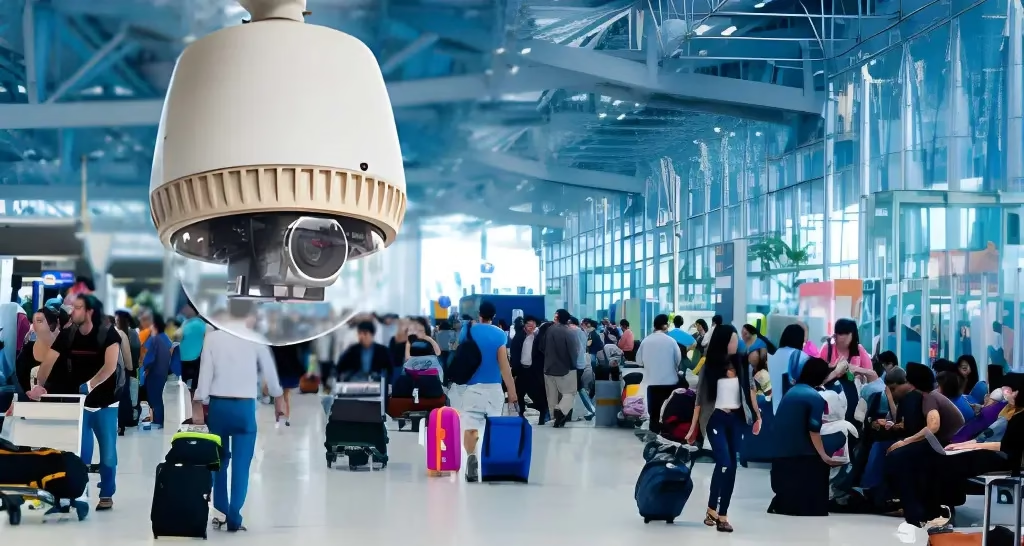
Role of Surveillance Systems in Airports: 7 Critical Roles
Airports function as highly complex environments where infrastructure, operations, and security intersect. Every day, they manage the movement of thousands of passengers, staff members, vehicles, and aircraft within a highly regulated environment. Maintaining safety, operational efficiency, and regulatory compliance under such conditions is a significant challenge. This is where surveillance systems in airports become mission critical.
Modern airports no longer depend solely on basic CCTV setups. Instead, they deploy advanced surveillance solutions that support real time monitoring, threat detection, and operational oversight. Today’s surveillance systems are designed not just for observation, but for decision support, risk prevention, and continuous operational improvement, helping airports function as safer and more efficient transport hubs.
Understanding the Role of Surveillance Systems in Airports
The role of surveillance systems in airports extends far beyond detecting suspicious activity. These systems play a crucial part in ensuring passenger safety, securing baggage operations, controlling access to restricted areas, managing crowd movement, and supporting emergency response efforts.
Contemporary surveillance deployments typically include:
- High resolution IP cameras
- Intelligent video analytics
- Centralized monitoring platforms
- Command and control systems
Together, these components allow security teams to monitor vast airport environments, analyze situations quickly, and respond effectively to incidents as they occur.
Why Advanced CCTV Surveillance Is Essential for Airports
Standalone or outdated camera systems often result in fragmented security operations and delayed responses. Modern surveillance systems provide a unified view of airport activities, allowing authorities to maintain situational awareness across terminals, airside zones, and perimeter areas.
Key advantages include:
- Centralized monitoring from control rooms
- Real time visibility across critical zones
- Faster coordination between security and operations teams
- Improved incident documentation and investigation
With these capabilities, airports can shift from reactive security measures to a more proactive and preventive approach.
Key Applications of Surveillance Systems in Airports
1. Passenger Safety and Crowd Management
One of the most important roles of surveillance systems in airports is ensuring crowd safety and controlled passenger movement. Intelligent video surveillance continuously monitors passenger density, movement patterns, and unattended objects across terminals.
This visual intelligence helps airport authorities:
- Identify overcrowded areas early
- Detect unusual or risky behavior
- Manage peak-hour congestion more effectively
For additional insight into how airport wide communication supports crowd safety and emergency messaging, readers can explore this detailed resource:
PAVA System in Airports – Complete Guide
By enabling timely interventions based on real-time observations, surveillance systems significantly enhance passenger safety and overall airport experience.
2. Access Control and Restricted Area Monitoring
Airports contain multiple high security zones, including runways, baggage handling areas, technical rooms, and control centers. Surveillance systems play a vital role in monitoring these restricted areas and ensuring that only authorized personnel gain access.
When unauthorized activity is detected, surveillance systems support:
- Immediate visual alerts on monitoring dashboards
- Rapid verification of access violations
- Faster response by security teams
This layered approach strengthens airport security while reducing reliance on manual supervision.
3. Networked CCTV Surveillance for Airport Operations
Modern airports rely on extensive CCTV surveillance systems supported by robust IT infrastructure to maintain continuous visibility across terminals and operational zones. Network connected cameras enable centralized monitoring of check-in areas, passenger circulation spaces, screening zones, and arrival halls.
In this context, CCTV surveillance systems in airports support operations by:
- Providing uninterrupted, real-time video feeds across multiple locations
- Enabling centralized monitoring and system control
- Supporting efficient incident review through recorded footage
- Improving coordination between security and operational teams
By leveraging networked surveillance architecture, airports gain reliable system performance, scalable coverage, and improved situational awareness across complex environments.
4. Surveillance Led Emergency Response and Fire Safety Monitoring
During emergencies such as fires, medical incidents, or security threats, rapid situational awareness is essential. Surveillance systems provide real-time visibility across airport terminals, enabling authorities to quickly verify fire alarm activations, assess incident locations, and understand the extent of the situation.
Continuous monitoring supports:
- Visual confirmation of fire alarm triggers and emergency alerts
- Immediate identification of affected zones and evacuation routes
- Faster decision making by security, safety, and emergency response teams
- Coordinated evacuation and incident management
By combining live surveillance feeds with fire alarm indications, airports can minimize confusion, control panic, and execute timely actions that protect passengers, staff, and critical infrastructure.

Operational Efficiency Through Surveillance Insights
Beyond security, surveillance systems contribute to smarter airport operations. Data collected from surveillance platforms helps airport authorities analyze passenger flow, queue lengths, and service bottlenecks.
Operational benefits include:
- Better staff allocation
- Reduced congestion at check-in and security points
- Data-driven planning for terminal expansion and redesign
As a result, surveillance systems in airports also support long-term operational efficiency and infrastructure planning.
Role of AI and Smart Analytics in Airport Surveillance
AI powered surveillance solutions are transforming airport security by enabling systems to understand normal activity patterns and automatically detect anomalies. These technologies significantly reduce dependence on continuous manual monitoring while improving response accuracy.
Key capabilities include:
- Behavior analysis to identify unusual or suspicious movement
- Automated incident detection based on real-time data
- Intelligent event tagging and reporting for faster review
- Facial recognition for identity verification and access control, where legally permitted
By improving detection speed and decision-making accuracy, AI-driven surveillance systems enable airports to identify potential risks early and respond effectively before situations escalate.
For insights on AI-enhanced video surveillance in airports, see Artificial Intelligence Systems for Supporting Video Surveillance at Airports (ScienceDirect).
Compliance, Privacy, and Ethical Surveillance
While surveillance is essential for airport security, it must be implemented responsibly. Modern surveillance systems are designed to align with legal and ethical standards through:
- Data encryption
- Role based access controls
- Compliance with aviation and data protection regulations
A well governed surveillance system in airports ensures safety while maintaining passenger trust and privacy.
Future of Airport Surveillance Systems
The future of airport surveillance lies in smarter, more connected ecosystems. Emerging developments include:
- Cloud based surveillance platforms
- Advanced control room visualization tools
- Integration with airport management systems
As airports continue to modernize, surveillance systems will remain a core pillar of secure, efficient, and resilient airport infrastructure.Several newly developed airports are already adopting advanced surveillance and security infrastructure as part of their modernization efforts. A recent example can be seen in the technology deployment at Ayodhya Airport, which reflects the direction of future-ready airport security systems.