
 admin
January 22, 2026
admin
January 22, 2026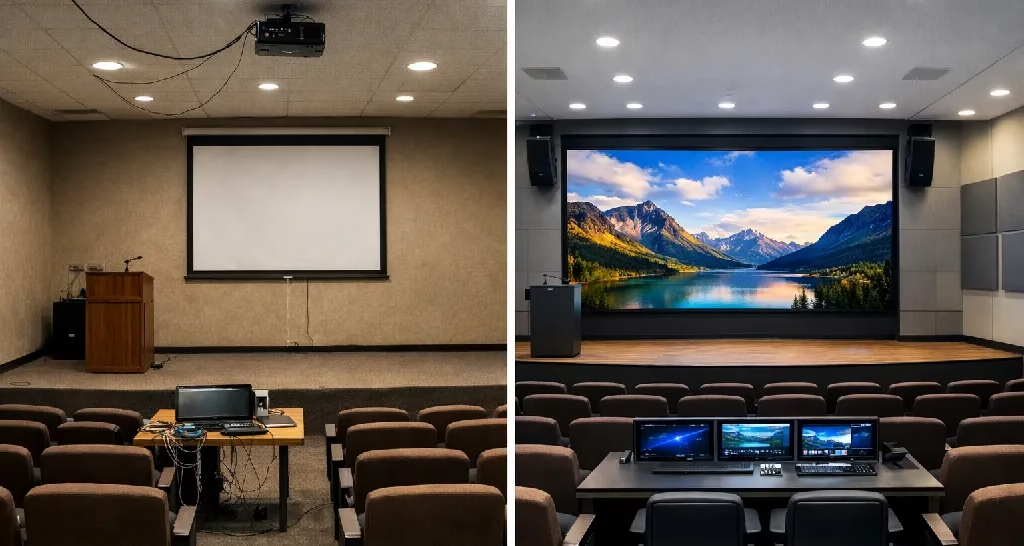
Resolving Auditorium Design Challenges with AV Solutions
Poor sound clarity, unclear visuals, and slow switching between content sources are common issues in many auditoriums today. These problems often surface during important seminars, presentations, and large gatherings where reliability and performance matter most.
For organisations designing or upgrading auditoriums, these issues are not minor inconveniences. They are core Auditorium Design Challenges that directly impact learning outcomes, audience engagement, and overall event effectiveness. Whether it’s a college auditorium, corporate town hall, government conference hall, or cultural venue, inadequate AV planning can significantly limit the functionality of the space.
Most of these challenges can be effectively addressed through the right AV solutions when they are planned early and implemented correctly.
What Are the Most Common Auditorium Design Challenges?
Auditoriums are complex spaces. Unlike standard meeting rooms or classrooms, they must support large audiences, varied seating layouts, and multiple types of events. As a result, several Auditorium Design Challenges appear repeatedly across educational, corporate, and public venues.
Below are the most common challenges organisations face when designing or upgrading an auditorium.
1. Inconsistent Sound Coverage Across the Hall
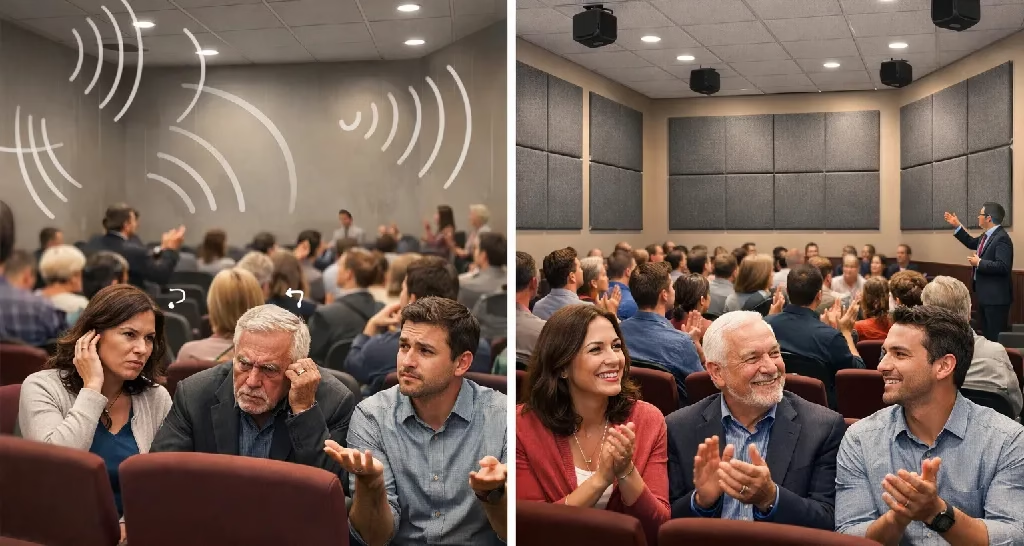
One of the most critical Auditorium Design Challenges is uneven sound distribution. In many auditoriums, audio may be clear in the front rows but difficult to hear at the back or sides.
This usually happens due to:
- Large room volumes
- Hard reflective surfaces
- Poor speaker placement
Without proper planning, sound clarity becomes dependent on volume rather than intelligibility, leading to listener fatigue and reduced engagement.
2. Echo and Poor Acoustics
Echo and reverberation are common in auditoriums with high ceilings and untreated walls. While these design elements may look impressive, they often create auditorium acoustics challenges that affect speech clarity and live performances.
This issue is especially noticeable during:
- Lectures and seminars
- Panel discussions
- Spoken word events
Acoustics and visibility are influenced by room geometry, materials, and layout. AV planning works alongside architectural design to address these factors early, helping reduce echo, improve speech clarity, and ensure even sound distribution across the hall, an approach supported by academic research on performance space acoustics.
(Source: Nature.com )
3. Limited Screen Visibility and Sightline Issues
Another frequent problem is poor visibility of screens from all seating positions. This leads to sound and visibility issues in auditoriums, where only part of the audience can clearly see presentations or video content.
Common causes include:
- Screens that are too small for the room size
- Incorrect mounting height
- Wide seating layouts without visual zoning
When visuals are hard to see, attention drops quickly regardless of content quality.
4. Lack of Flexibility for Different Event Types
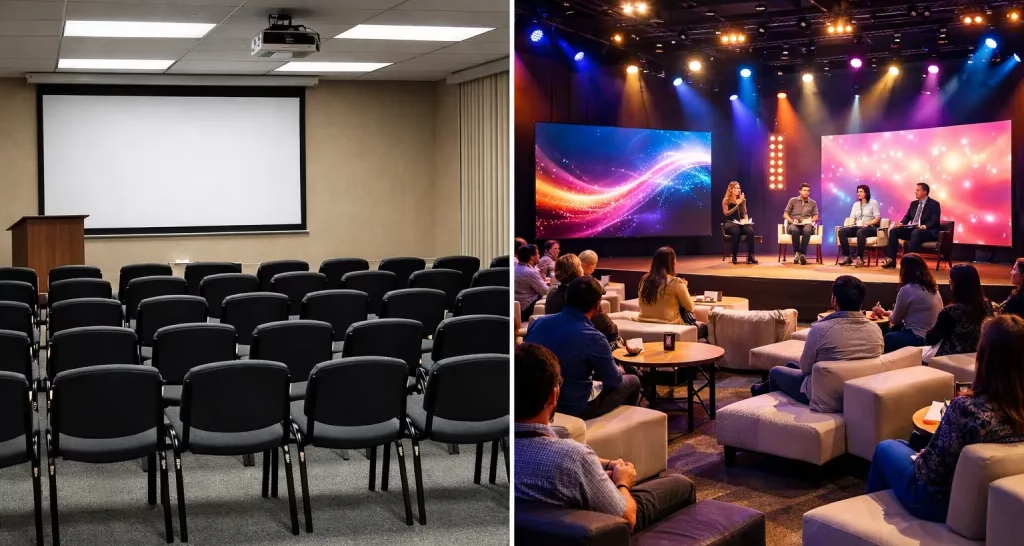
Modern auditoriums are expected to host lectures, conferences, cultural programs, training sessions, and hybrid events. However, many are designed with a single use case in mind.
This lack of flexibility becomes a major Auditorium Design Challenge, resulting in:
- Manual reconfiguration for each event
- Long setup times
- Dependency on technical staff
Auditoriums that cannot adapt easily often remain underutilised.
5. Poor Integration Between AV Systems
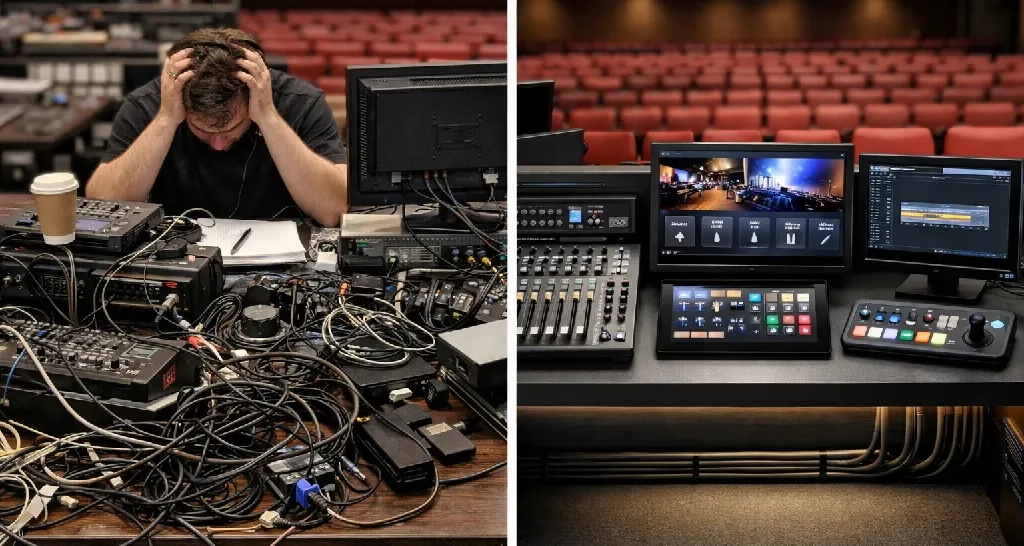
Many auditoriums suffer from disconnected systems audio, displays, microphones, and control interfaces that do not work together smoothly. These auditorium audio visual problems are typically the result of phased installations or unplanned upgrades.
The outcome is:
- Confusing controls
- Frequent technical issues
- Inconsistent performance across events
This results in operational inefficiencies and ongoing maintenance challenges.
Where Auditorium Design Matters Most?
Auditoriums are no longer limited to traditional performances. Today, they are used in:
- Educational institutions (schools, colleges, universities)
- Corporate offices (town halls, leadership meets, annual events)
- Government and public sector buildings
- Convention centres and training institutes
- Cultural and community halls
In all these spaces, AV plays a central role. Let’s look at the most common auditorium design problems and how AV solutions address them in practical ways.
How AV Solutions Address Common Auditorium Design Challenges?
Many Auditorium Design Challenges are not caused by the size of the space or its architecture alone. In most cases, they originate from how audio, visual, and control systems are planned and implemented within the design. Modern AV solutions directly address these gaps by aligning technology with how the auditorium is actually used.
Below are the key ways AV solutions help resolve common design challenges.
Improving Sound Clarity and Coverage
One of the most frequent Auditorium Design Challenges is inconsistent sound quality across seating areas. Modern AV solutions approach this through careful system design rather than simply increasing volume.
This includes:
- Strategically placed speakers to ensure even sound distribution
- Digital audio processing to control echo and feedback
- Microphone systems designed for speech clarity and live events
These measures help overcome auditorium acoustics challenges and ensure that speech and audio remain clear throughout the hall.
Enhancing Screen Visibility for All Audiences
Poor visual reach is another common issue, leading to sound and visibility issues in auditoriums. AV solutions improve this by matching display technology to room size, layout, and viewing distance.
Typical approaches include:
- Using large format LED displays or high brightness projection systems
- Positioning screens based on audience sightlines
- Supporting multiple display zones for wide seating layouts
This ensures that visual content remains clear and readable from every seat.
Enabling Flexibility for Multiple Event Types
Auditoriums are rarely used for a single purpose. AV solutions address this Auditorium Design Challenge by introducing flexibility into system design.
Key features include:
- Preset configurations for lectures, performances, and presentations
- Wireless content sharing for presenters
- Quick switching between audio and visual sources
This flexibility reduces setup time and supports diverse event requirements without complex reconfiguration.
Simplifying System Operation Through Integration
Disconnected systems often create auditorium audio visual problems, especially during live events. Integrated AV solutions bring audio, visuals, and control systems under a single interface.
This allows:
- Centralised control of multiple AV components
- Consistent performance across different events
- Reduced dependency on manual adjustments
As a result, day to day operation becomes more efficient and reliable.
Supporting Long Term Performance and Scalability
AV solutions also address future focused Auditorium Design Challenges. Modern systems are designed to adapt to evolving requirements such as hybrid events, recording, and content streaming.
This is achieved through:
- Modular system architecture
- Upgrade ready cabling and infrastructure
- Compatibility with modern digital platforms
By planning for scalability, organisations avoid premature obsolescence and costly redesigns.
Why Is AV Planning Critical in Auditorium Design?
Many Auditorium Design Challenges occur not because of poor equipment, but because AV requirements are introduced too late in the design process. When architectural decisions are finalised before AV planning begins, technology is forced to adapt to the space rather than support its intended use.
Early AV planning ensures that audio, visual, and control systems align with how the auditorium will actually function whether for lectures, presentations, performances, or hybrid events. Without this alignment, issues such as uneven sound coverage, poor screen visibility, and limited system flexibility become common.
Planning AV at the design stage helps prevent post construction compromises like restricted speaker placement, poorly positioned displays, and inadequate cabling routes. It also supports better acoustics and visibility by considering room geometry, materials, and seating layouts from the outset.
How Integrated AV Improves Auditorium Performance Over Time?
An integrated AV system improves the long term performance and return on investment of an auditorium by ensuring audio, visual, and control systems work together as a unified setup. This consistency reduces operational inefficiencies such as frequent adjustments, event time troubleshooting, and high maintenance effort, leading to better space utilisation and lower ongoing costs. At the same time, integrated AV supports scalability, allowing the auditorium to adapt to evolving needs like hybrid events, recording, and live streaming without requiring major redesigns protecting the original investment and extending the life of the space.
If you are planning an auditorium design or looking to upgrade an existing space, investing in an integrated AV approach ensures long term performance, operational efficiency, and measurable return on investment as demonstrated by projects such as Jyoti Bishnu Prekhyagriha, Northeast India’s largest auditorium, where an integrated AV system has been successfully delivered by Vallect.