
 admin
June 10, 2026
admin
June 10, 2026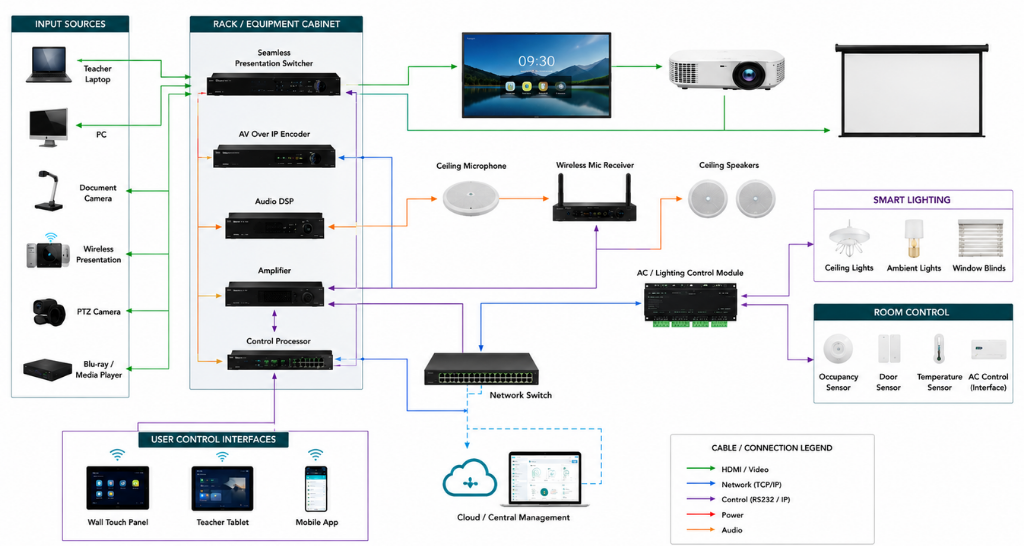
Smart Classroom Control Systems: Managing Lighting, Audio, and Displays from One Platform
Educational institutions are rapidly embracing digital transformation to create more interactive, efficient, and engaging learning environments. As classrooms become equipped with advanced displays, audio systems, projectors, video conferencing tools, and smart lighting, managing these technologies individually can become complex. This is where Smart Classroom Control Systems play a vital role.
Smart Classroom Control Systems provide a centralized platform that allows educators and administrators to manage multiple classroom technologies through a single interface. From controlling lighting and audio levels to operating displays and projectors, these systems simplify classroom operations while enhancing the overall teaching experience.
Today, educational institutions are increasingly investing in smart classroom automation systems to streamline technology management and improve learning outcomes. By integrating different technologies into one ecosystem, Smart Classroom Control Systems help institutions create efficient, user-friendly, and future-ready classrooms.
What are Smart Classroom Control Systems?
Smart Classroom Control Systems are centralized technology platforms designed to manage various classroom devices and environmental settings from a single control interface. These systems integrate lighting controls, display systems, projectors, audio equipment, cameras, climate controls, and communication devices into one unified solution.
Unlike traditional classrooms where each device operates independently, Smart Classroom Control Systems allow users to control multiple technologies through touch panels, mobile devices, or centralized management software.
Modern classroom AV control systems can automate routine classroom functions such as:
- Turning displays on and off
- Adjusting lighting levels
- Managing microphone and speaker settings
- Launching presentation modes
- Switching between multiple input sources
- Controlling video conferencing equipment
As educational technology evolves, integrated education technology solutions are becoming essential for creating seamless and efficient teaching environments.
Importance of Smart Classroom Control Systems in Education
Educational institutions face growing demands for technology enhanced learning experiences. Managing multiple devices manually can waste valuable teaching time and create technical challenges.
Key Benefits :
Improved Teaching Efficiency
Teachers can access all classroom technologies from a single interface, reducing setup time and minimizing technical disruptions.
Enhanced Student Engagement
Smart Classroom Control Systems enable educators to focus more on teaching and less on operating technology.
Better Resource Management
Institutions can monitor and control classroom resources centrally, improving energy efficiency and equipment utilization.
Simplified User Experience
Modern smart classroom automation systems provide intuitive controls that require minimal technical expertise.
Support for Hybrid Learning
Many classroom AV control systems seamlessly integrate with video conferencing platforms, enabling hybrid and remote learning environments.
Applications & Core Components :
Major Applications of Smart Classroom Control Systems
1. Interactive Classrooms
Teachers can manage displays, interactive boards, and multimedia content from a unified dashboard.
2. Lecture Halls
Large lecture halls utilize Smart Classroom Control Systems to coordinate multiple displays, microphones, cameras, and lighting zones.
3. Distance Learning Spaces
Integrated controls simplify virtual classroom operations and online collaboration and explore Indoor LED Display solutions for high-quality visual experiences in classrooms, auditoriums, and commercial spaces. Perfect for dynamic content and presentations.
4. Training Centers
Corporate and educational training facilities use centralized controls to manage presentations and audiovisual equipment.
5. Auditorium Management
Educational institutions deploy Smart Classroom Control Systems in auditoriums to coordinate stage lighting, projection systems, and sound reinforcement.
Industry Insights: EdTech Adoption By The Numbers :
| Key Metric | Estimated Impact / Value | Why It Matters |
| Global Smart Classrooms | 65% – 75% | The new normal. Over two-thirds of schools globally have now integrated smart technologies into their daily curriculum. |
| Setup Time Reduction | 40% – 60% | Less tech-fiddling, more teaching. Automation cuts down classroom prep time by up to half. |
| Tech Utilization Boost | 30% – 45% | Schools aren’t just buying tech; they are actually using it more effectively thanks to intuitive interfaces. |
| Student Engagement | 20% – 35% | Interactive screens and smart tools keep students focused, curious, and actively participating. |
| Eco-Efficiency (Energy Savings) | 15% – 30% | Smart automation powers down unused devices and lights, slashing institutional carbon footprints and utility bills. |
Implementation Roadmap for Smart Classroom Automation Systems :
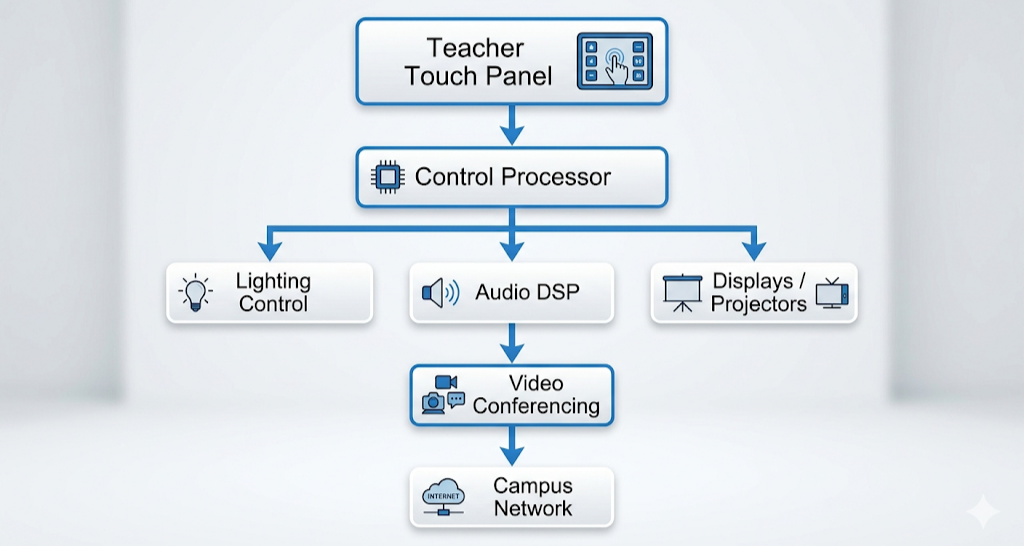
Deploying Smart Classroom Control Systems requires careful planning and integration with existing educational infrastructure.
Deployment Process :
Step 1: Infrastructure Assessment
Evaluate classroom dimensions, existing AV equipment, network readiness, and power availability.
Step 2: System Design
Develop a control architecture that supports current and future classroom technologies.
Step 3: Hardware Installation
Install control processors, displays, lighting controllers, audio systems, and networking equipment.
Step 4: Software Integration
Configure user interfaces and automation workflows.
Step 5: Testing and Training
Validate system performance and train faculty members.
Advancements in Smart Classroom Control Systems :
The future of Smart Classroom Control Systems is being shaped by artificial intelligence, automation, and cloud-based management platforms.
AI-Powered Classroom Automation
Future smart classroom automation systems will automatically adjust lighting, audio levels, and display settings based on classroom occupancy and teaching activities.
Cloud-Based Management
Educational administrators will be able to monitor and control classrooms remotely through centralized cloud dashboards.
Voice-Controlled Classrooms
Voice assistants may become part of classroom AV control systems, allowing teachers to operate technologies using simple voice commands.
Advanced Analytics
Future integrated education technology solutions will provide data-driven insights into classroom utilization and technology performance.
How to Choose the Right Partner ?
Selecting the right technology partner is essential for successful implementation.
Consider These Factors :
Educational Experience
Choose a provider with proven expertise in Smart Classroom Control Systems for schools, colleges, and universities.
System Integration Capabilities
The provider should understand how to integrate displays, audio systems, lighting controls, and networking infrastructure.
Scalability
Ensure the solution can support future classroom expansion and technology upgrades.
Technical Support
Reliable maintenance and support services are critical for long-term success.
Customization
Every institution has unique requirements, making customized integrated education technology solutions highly valuable.
Company Expertise / Case Study
A leading provider of Smart Classroom Control Systems in Educational Institutions delivers advanced and scalable integrated education technology solutions. Vallect specializes in designing and implementing smart classroom automation systems that combine lighting control, audio systems, and display management into a single centralized platform.
Our expertise in classroom AV control systems ensures seamless integration of interactive displays, projectors, video conferencing tools, and smart lighting. With successful deployments across schools, colleges, and universities, Vallect enhances teaching efficiency, student engagement, and operational control. These solutions simplify classroom management, reduce technical challenges, and create future-ready digital learning environments for modern educational institutions.