
 admin
May 28, 2026
admin
May 28, 2026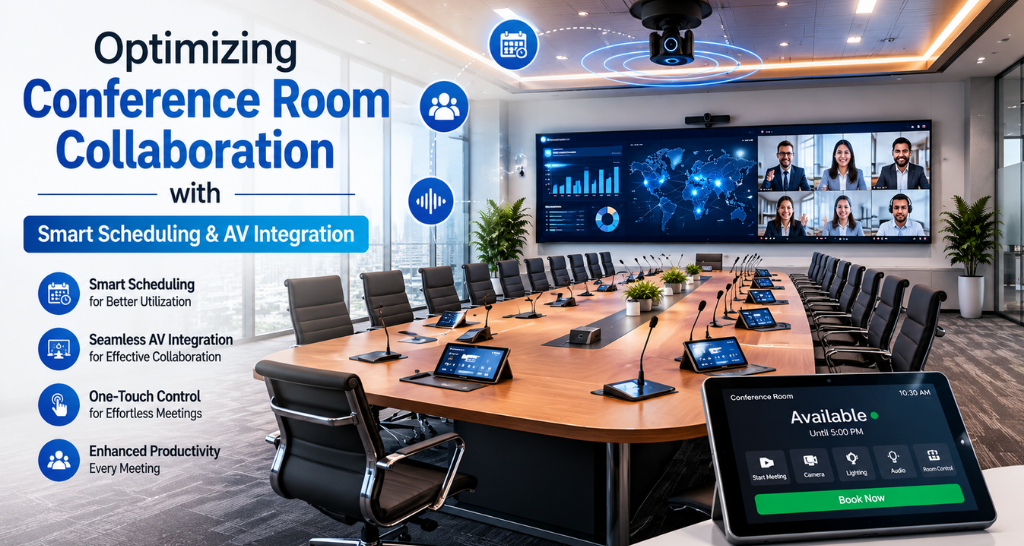
Optimizing Conference Room Collaboration with Smart Scheduling and AV Integration
Modern workplaces are evolving faster than ever. Hybrid work culture, distributed teams, and digital-first communication have transformed how meetings happen inside organizations. Yet many businesses still struggle with delayed meetings, double-booked spaces, disconnected devices, and poor communication experiences during important discussions. This is where Audio Visual Integration becomes essential for modern offices and AV Integration solutions simplify communication with seamless audio, video, display, and smart collaboration technology.
Today, organizations are not just building meeting spaces. They are creating intelligent collaboration environments powered by Conference Room Scheduling System solutions and advanced Audio Visual Integration for Meeting Rooms technologies. From corporate boardrooms to training centers and co-working spaces, smart meeting environments help teams communicate better, save time, and improve productivity.
Companies are now investing heavily in AV and Scheduling System Integration Setup because employees expect meetings to start instantly without technical confusion. Whether it is a video conference with international clients or a daily internal team meeting, integrated technology makes collaboration seamless and efficient.
Why Traditional Meeting Rooms No Longer Work?
Many workplaces still rely on outdated systems where employees manually check room availability, connect cables individually, adjust audio settings, or troubleshoot screens before every meeting. These delays reduce productivity and create frustration.
Common meeting room problems include:
- Double booking of conference rooms
- Delayed meeting start times
- Poor sound quality during virtual meetings
- Device compatibility issues
- Lack of centralized room control
- Difficulty managing hybrid meetings
- Confusing room availability systems
This is exactly why organizations are adopting Audio Visual Integration to simplify operations and create a smarter meeting experience.
With intelligent automation, meetings can start with a single touch. Displays, microphones, cameras, speakers, and conferencing platforms work together through one connected ecosystem.
What is Audio Visual Integration?
Audio Visual Integration refers to the process of combining audio systems, video conferencing tools, displays, control panels, microphones, speakers, and collaboration technologies into one centralized meeting environment.
Instead of operating multiple disconnected devices, businesses use integrated systems that communicate automatically. This improves meeting efficiency, user experience, and collaboration quality.
Modern Audio Visual Integration for Meeting Rooms typically includes:
- Interactive displays
- Wireless presentation systems
- Ceiling microphones
- PTZ conference cameras
- Centralized room controls
- Digital signage
- Smart lighting integration
- Acoustic optimization
- Video conferencing platform integration
When combined with a Conference Room Scheduling System, the entire meeting ecosystem becomes intelligent and automated.
How Conference Room Scheduling Systems Improve Workplace Efficiency
A Conference Room Scheduling System helps organizations manage meeting spaces efficiently. Employees can instantly view room availability, reserve spaces, and avoid scheduling conflicts.
Modern systems provide:
- Real-time room booking
- Touch panel scheduling displays
- Outlook and Google Calendar integration
- Occupancy analytics
- Automatic booking release for unused rooms
- Meeting reminders
- Smart room utilization reports
Businesses implementing a Conference Room Scheduling System often see significant improvements in meeting management and employee productivity.
For example, in large corporate offices where multiple teams share meeting spaces, room scheduling confusion can waste several hours every week. Smart scheduling platforms eliminate these inefficiencies.
When integrated with Audio Visual Integration, meeting rooms automatically prepare themselves before meetings begin.
How Audio Visual Integration for Meeting Rooms Enhances Collaboration
Hybrid meetings have become a standard part of modern work culture. Teams now collaborate across cities, countries, and time zones. Without reliable technology, communication gaps become inevitable.
This is why Audio Visual Integration for Meeting Rooms is critical for modern businesses.
Integrated meeting rooms improve collaboration by offering:
Clear Communication
Advanced microphones and speaker systems ensure every participant is heard clearly, whether they are sitting in the room or joining remotely.
Better Video Quality
High-definition conferencing cameras provide professional virtual meeting experiences.
Faster Meeting Start Times
With automated controls, users no longer struggle with cables, adapters, or device setup.
Seamless Content Sharing
Wireless presentation systems allow instant sharing from laptops, tablets, or smartphones.
Improved Employee Experience
Employees spend less time troubleshooting and more time focusing on productive discussions.
Organizations using Audio Visual Integration create more engaging and professional meeting experiences for both internal teams and external clients.
Why Businesses Need AV and Scheduling System Integration Setup
Individually managed meeting technologies often create operational complexity. Businesses may have separate tools for scheduling, conferencing, displays, and room controls, leading to inefficiency.
An effective AV and Scheduling System Integration Setup connects all technologies into a unified platform.
This setup allows:
- Automatic room activation before meetings
- Scheduled display and projector control
- Integrated lighting and climate adjustments
- Touchless meeting initiation
- Unified control interfaces
- Real-time room monitoring
With a properly designed AV and Scheduling System Integration Setup, meeting rooms become fully automated collaboration environments.
For example, when a scheduled meeting begins, the room can automatically:
- Turn on displays
- Activate conferencing systems
- Adjust lighting
- Connect remote participants
- Display meeting details on room panels
This level of automation improves operational efficiency while creating a premium workplace experience.
Key Components of Smart Meeting Room Integration
Successful Audio Visual Integration for Meeting Rooms requires multiple technologies working together smoothly.
Interactive Displays
Large-format interactive displays support presentations, brainstorming, and collaborative discussions.
Video Conferencing Systems
Integrated conferencing solutions provide high-quality remote communication.
Room Scheduling Panels
These panels display room availability and connect directly with the Conference Room Scheduling System.
Centralized Control Systems
Users can manage audio, video, lighting, and conferencing through one interface.
Wireless Collaboration Tools
Employees can share content instantly without physical connections.
Acoustic Solutions
Sound optimization improves speech clarity and reduces echo.
Modern Audio Visual Integration ensures every component communicates seamlessly for a frictionless user experience.
Benefits of Audio Visual Integration for Hybrid Workplaces
Hybrid workplaces require intelligent communication infrastructure. Employees now expect equal collaboration experiences whether they are working remotely or inside the office.
This is where Audio Visual Integration delivers major advantages.
Increased Productivity
Meetings begin faster with fewer technical interruptions.
Improved Collaboration
Teams communicate effectively across locations.
Enhanced User Experience
Employees interact with simple, intuitive systems.
Better Space Utilization
A Conference Room Scheduling System helps organizations optimize room usage.
Professional Client Communication
Integrated meeting rooms create a stronger business impression.
Reduced IT Support Requests
Centralized automation minimizes technical issues.
Organizations investing in Audio Visual Integration for Meeting Rooms often achieve better operational efficiency and employee satisfaction.
How Smart Scheduling Prevents Meeting Room Conflicts
Meeting room conflicts are a common issue in growing organizations. Employees may reserve rooms but never use them, while others struggle to find available spaces.
A modern Conference Room Scheduling System solves these challenges using intelligent automation.
Features like occupancy sensors and auto-release functionality help businesses maximize room utilization.
For example:
- If no one checks into a meeting room, the system automatically releases it for others.
- Employees can locate available rooms instantly through centralized dashboards.
- Real-time updates reduce booking confusion.
When combined with AV and Scheduling System Integration Setup, meeting spaces become more organized and efficient.
The Role of AI and Automation in Meeting Rooms
Artificial Intelligence is transforming workplace collaboration technologies. Modern Audio Visual Integration systems now include intelligent automation features such as:
- Voice-controlled meeting activation
- AI-powered camera tracking
- Noise cancellation technology
- Automated transcription
- Smart occupancy detection
- Meeting analytics
AI-enhanced Audio Visual Integration for Meeting Rooms helps organizations improve communication quality while simplifying room management.
Future-ready workplaces are increasingly relying on intelligent automation to create seamless collaboration experiences.
Industries Benefiting from Audio Visual Integration
Many industries are adopting Audio Visual Integration to modernize communication infrastructure.
Corporate Offices
Smart boardrooms improve executive collaboration and hybrid meetings.
Educational Institutions
Interactive classrooms and lecture halls enhance learning experiences.
Healthcare Facilities
Integrated conferencing systems support remote consultations and training.
Government Buildings
Secure communication environments improve operational coordination.
Co-Working Spaces
Shared workspaces benefit from centralized Conference Room Scheduling System management.
Training Centers
AV-enabled collaboration environments improve presentations and workshops.
Across industries, businesses are recognizing the long-term value of AV and Scheduling System Integration Setup.
Important Considerations Before Implementing AV Integration
Before implementing Audio Visual Integration for Meeting Rooms, organizations should evaluate:
- Room size and layout
- User requirements
- Existing IT infrastructure
- Scalability needs
- Video conferencing platforms
- Acoustic conditions
- Network capabilities
- Future expansion plans
Choosing the right integration partner is equally important. A professionally designed AV and Scheduling System Integration Setup ensures long-term reliability and performance.
Future Trends in Conference Room Technology
The future of workplace collaboration is becoming increasingly intelligent and automated.
Emerging trends include:
- Touchless meeting controls
- AI-powered scheduling systems
- Cloud-managed AV environments
- Smart occupancy analytics
- Immersive collaboration displays
- Advanced wireless conferencing
- IoT-enabled room automation
As hybrid work continues evolving, businesses will rely more heavily on Audio Visual Integration to create connected, efficient, and intelligent workspaces.
Modern organizations are no longer viewing meeting rooms as simple physical spaces. They are becoming strategic collaboration hubs designed for productivity and communication excellence.
Creating Future-Ready Collaborative Workspaces Through Smart AV Integration
Efficient workplace collaboration depends heavily on technology that works seamlessly behind the scenes. Businesses today require smarter meeting environments that eliminate delays, simplify communication, and support hybrid work culture and Upgrade communication and visual impact with Video Wall Display solutions designed for control rooms, conference spaces, retail, and immersive digital experiences..
By implementing advanced Audio Visual Integration, organizations can transform ordinary meeting rooms into intelligent collaboration spaces. A reliable Conference Room Scheduling System further improves operational efficiency by reducing booking conflicts and optimizing room utilization.
Most importantly, a well-planned AV and Scheduling System Integration Setup ensures all technologies work together smoothly, creating a professional and user-friendly meeting experience.
As workplaces continue evolving, investing in Audio Visual Integration for Meeting Rooms is no longer just a technology upgrade. It has become a business necessity for organizations aiming to improve communication, productivity, and employee collaboration in the modern digital workplace.