
 admin
January 8, 2026
admin
January 8, 2026
Audio Visual Solutions for Lecture Halls
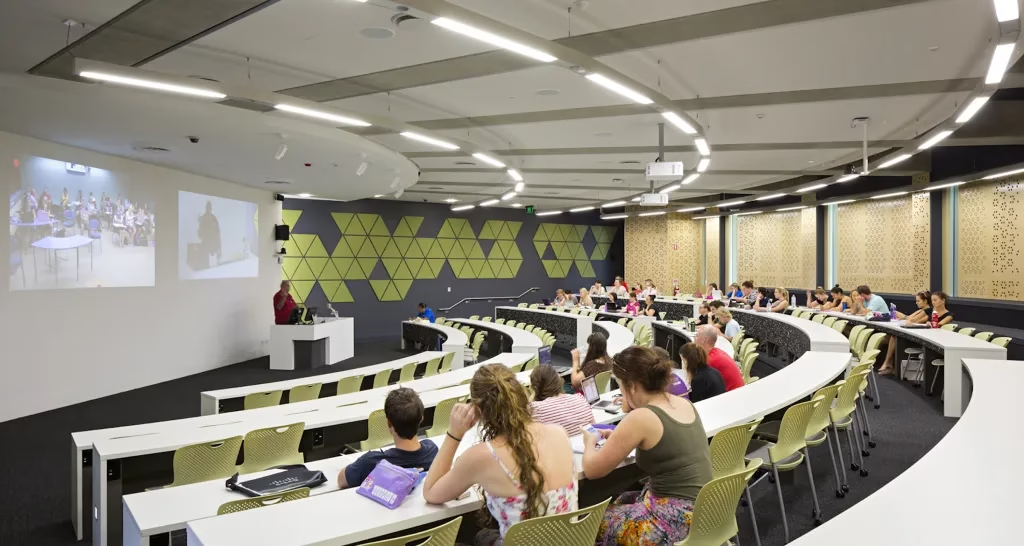
In many large university lecture halls today, the challenge is not the absence of technology. It is that the technology exists in fragments. A professor explains a complex concept, annotates slides on a screen, and speaks clearly from the podium. Yet students seated toward the back struggle to hear every detail or follow the visual explanation. At the same time, the same lecture is being streamed live and recorded for later access. Remote students hear uneven audio, miss key annotations, or see a partial view of the presentation.
These gaps are no longer isolated issues. They are common across colleges and universities where lecture halls were designed primarily for in person teaching and later adapted often hastily for hybrid education. As academic delivery models evolve, lecture halls are being asked to do more than they were ever planned for. This is where audio visual solutions for lecture halls become a critical part of academic infrastructure rather than a supporting add on.
Why do Lecture Halls need Integrated Audio Visual Solutions?
Most university lecture halls were designed with a limited teaching model in mind where the lecturer and students are physically present in the same space, and technology plays a supporting role rather than a central one. This assumption no longer reflects how higher education functions today.
As student intake increases, seating extends deeper and wider. Without integrated audio visual solutions, sound is often amplified from a single source instead of being evenly distributed. This results in clear audio in some areas and echo, distortion, or dropouts in others. Visual systems are installed without fully accounting for viewing angles, ambient light, or the need to clearly present annotated content across large rooms.
Annotation tools are commonly added as independent components, interactive displays, tablets, or document cameras without being connected to a broader AV framework. Lecture recording and live streaming are introduced later, treated as optional additions rather than essential teaching capabilities. Faculty members are then required to manage microphones, displays, annotation tools, recording software, and live class platforms simultaneously.
The outcome is predictable. Teaching quality varies from session to session and across departments. Recorded lectures lack context or clarity. Live classes for remote students feel disconnected from what is happening in the lecture hall. In large lecture theatres and university auditoriums, these challenges intensify further due to seating depth, ceiling height, and complex room acoustics.
The issue is not the presence of audio visual technology. It is the absence of integrated audio visual solutions for lecture halls systems designed to work together as part of a single academic environment.
Expectations from Modern Lecture Halls
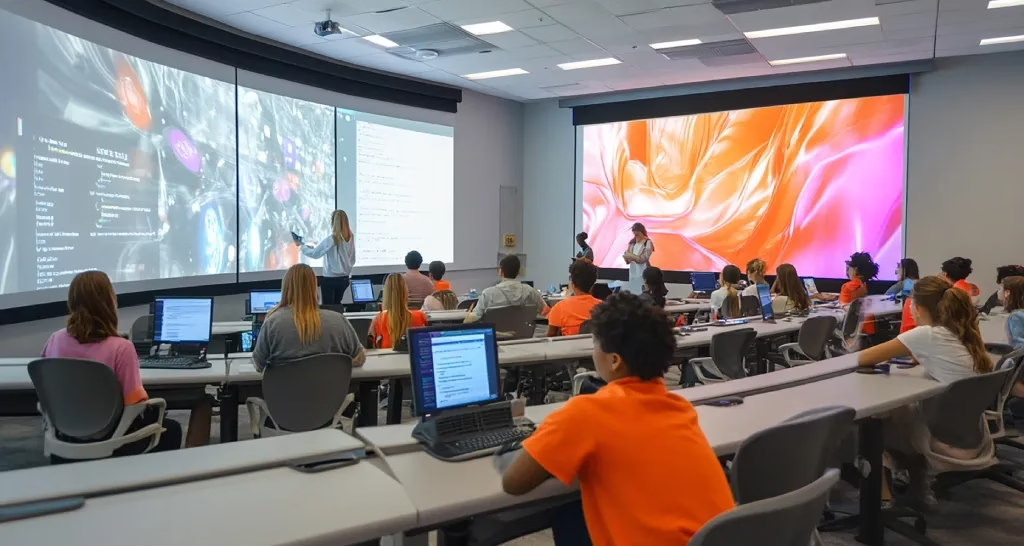
In today’s colleges and universities, lecture halls, large lecture theatres, and academic auditoriums are no longer spaces used only for live, in person instruction. They have become multi purpose academic environments that must support several teaching modes at once.
First, they must support live teaching where every student, regardless of seating position, can clearly hear and see the lecture. This includes not just the lecturer’s voice, but also student interactions, questions, and discussions.
Second, these spaces must enable real time annotation. Faculty members increasingly rely on live markup writing equations, drawing diagrams, highlighting text, or explaining processes step by step. These annotations are central to comprehension and cannot be treated as secondary visuals.
Third, there is the requirement for live classes that include remote participants. Students attending from hostels, homes, or other campuses should receive the same clarity of audio and visuals as those physically present in the lecture hall or lecture theatre.
Finally, lecture halls must reliably produce recorded lectures. These recordings are used for revision, for students who miss sessions, and often across multiple academic years. Poor quality recordings reduce their academic value and increase faculty workload.
Meeting all these expectations requires AV systems designed as integrated environments rather than collections of unrelated tools, a core principle of modern AV solutions for higher education.
How Audio Visual Solutions Address These Challenges
Well planned audio visual solutions for lecture halls focus on system level design. Instead of amplifying sound from a single point, audio is distributed evenly across the room. This ensures that spoken explanations remain clear in every row and that student interactions are audible without distortion.
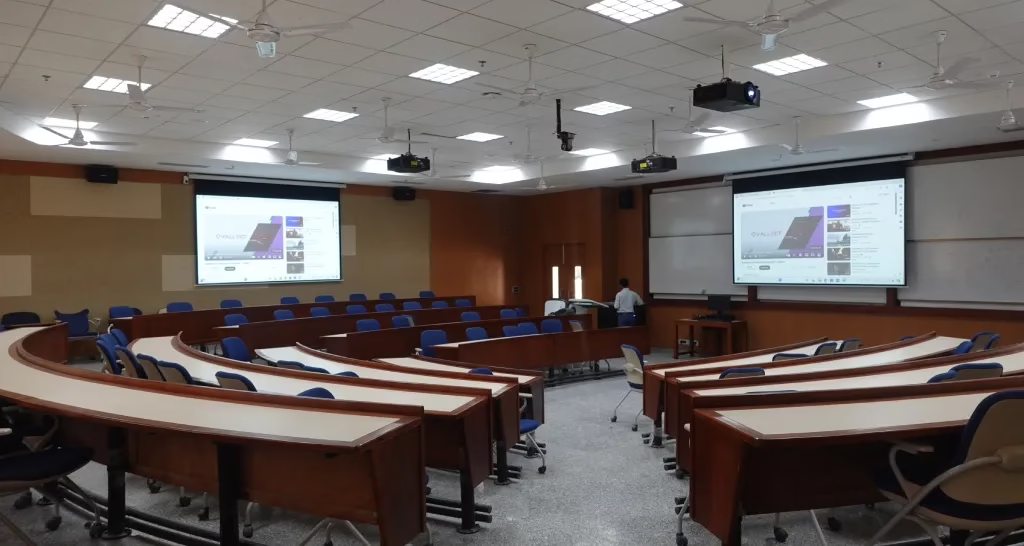
Visual systems are selected and positioned based on room geometry, seating depth, and lighting conditions. Displays and projection systems are designed to keep annotated content legible, even for students seated far from the screen or in spaces with natural daylight. In lecture theatres and university auditoriums, this system level approach is critical, as sound reflection and screen visibility are far harder to control without integrated AV planning.
Annotation becomes part of the teaching workflow rather than a separate activity. When a faculty member annotates slides or writes on a digital surface, that same view is shared simultaneously with students in the lecture hall, participants in live classes, and those watching recorded lectures later. This continuity preserves context and improves comprehension.
Lecture capture systems are integrated into the AV infrastructure, recording audio, video, and annotations together. Instead of producing fragmented recordings that require manual editing or explanation, the system captures the lecture as it was delivered. Faculty members do not need to manage recording software independently; the process is automated and consistent.
Control systems play a critical role. Simplified interfaces allow instructors to start a lecture, annotate content, enable live streaming, and record sessions with minimal steps. This usability is essential in universities where multiple instructors use the same lecture hall or auditorium throughout the day, often with varying levels of technical comfort.
Outcomes That Matter to Universities
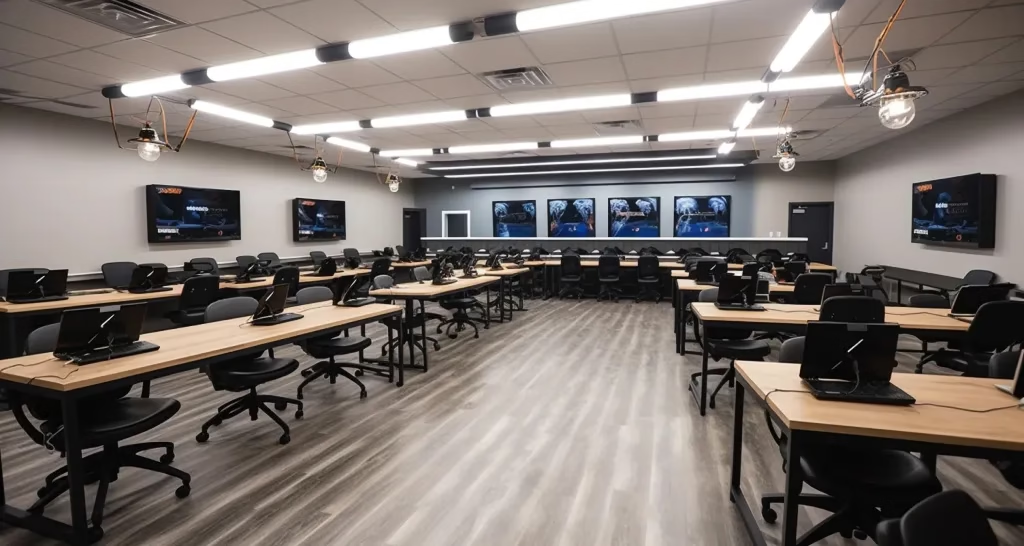
The impact of integrated AV systems in lecture halls is best evaluated through outcomes rather than features.
Improved comprehension in large classes
Even audio distribution and clear visual presentation ensure that students in the last rows receive the same academic content as those in the front. Annotations remain visible and meaningful across the entire lecture hall or lecture theatre.
Consistency across live and recorded lectures
When audio, visuals, and annotations are captured together, recorded lectures retain their instructional value. Students revisiting content experience the lecture as intended, not as a degraded version.
Reduced operational dependency
Faculty members can manage lectures independently without relying on technical staff for routine sessions. This reduces operational strain and allows support teams to focus on maintenance and system improvements.
Better access for remote and absent students
Live classes and recorded lectures deliver a consistent academic experience regardless of location. This supports inclusivity and continuity in higher education.
These outcomes directly influence teaching quality, student satisfaction, and the long term effectiveness of academic delivery.
These outcomes directly influence teaching quality, student satisfaction, and the long term effectiveness of academic delivery. Research on the impact of audio visual technologies in higher education has shown that AV system quality directly affects teaching effectiveness, learner engagement, and overall user satisfaction in university environments.
Selecting the Right Audio Visual Solutions for Lecture Halls
From a university perspective, selecting audio visual solutions should begin with how the lecture hall is used, not with specific products.
Room size, seating layout, and acoustic characteristics determine the audio strategy. Large halls require distributed microphones and speakers, not simply higher amplification. Visual systems must be chosen based on viewing distance and the importance of annotated content.
Annotation tools should integrate seamlessly with presentation systems so that faculty do not need to switch between devices or workflows during a lecture. Lecture recording systems must reliably capture all teaching elements with minimal setup.
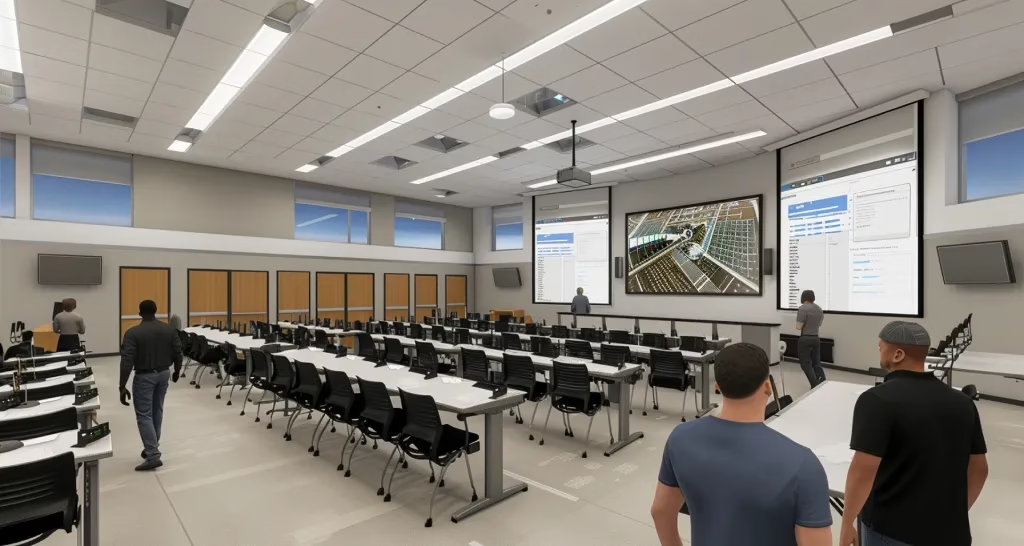
Ease of use is critical. Control interfaces should be intuitive enough for instructors across departments to operate without training or hesitation. Reliability matters more than advanced features in daily academic use.
For universities planning lecture hall AV system design across multiple halls, lecture theatres, and auditoriums, scalability and consistency become as important as individual room specifications. Systems should be adaptable across spaces to ensure predictable performance and easier maintenance.
A Practical Takeaway
In colleges and universities, lecture halls are no longer single purpose spaces. They are environments where live teaching, live classes, and recorded lectures happen simultaneously. Audio visual solutions for lecture halls must therefore be planned as long term academic infrastructure, not short term technology additions. When AV systems are fully integrated into teaching workflows, they support clarity, consistency, and reliability across the entire learning experience benefiting faculty, students, and institutions alike.
Leading medical and academic institutions across India have already recognised the role of advanced AV infrastructure in strengthening large-scale education delivery. Vallect has implemented integrated audio visual solutions for institutions such as AIIMS Bathinda, AIIMS Guwahati, and RIPANS Medical College, supporting smart classrooms, academic auditoriums, and collaborative learning environments aligned with modern teaching needs.
Similarly, Vallect has worked with premier management and public universities including IIM Bodh Gaya and Biswa Bangla University to deploy structured AV systems that enable lecture capture, live academic sessions, and scalable teaching infrastructure across campuses.
These implementations reflect a broader shift in Indian higher education, where audio visual solutions for lecture halls and auditoriums are increasingly treated as long term academic infrastructure rather than isolated technology upgrades.
FAQ
Looking to upgrade your Lecture Halls with smart AV solutions?
Reach us at info@vallect.com or call +91-7303435333 to get started.