
 admin
March 25, 2026
admin
March 25, 2026
Common Mistakes to Avoid While Installing ELV Systems
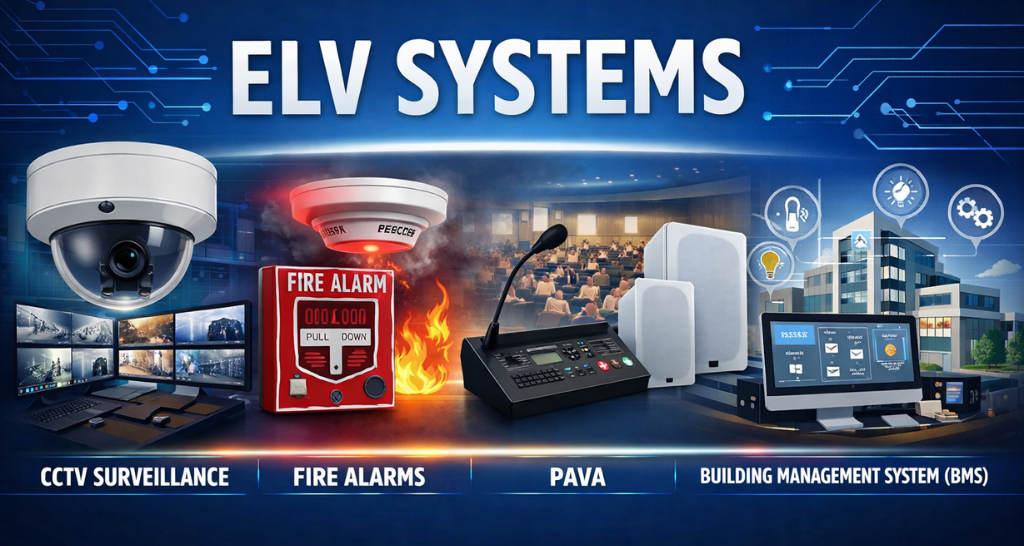
ELV systems are crucial for modern buildings, enabling advanced security, communication, and automation across large facilities such as airports, campuses, and auditoriums. Improper installation can lead to operational inefficiencies, safety risks, and increased maintenance costs. This guide highlights common mistakes to avoid during installation, helping you achieve a reliable, secure, and efficient setup.
Lack of Proper Planning and Design
One of the most common mistakes during installation is skipping proper planning. A well-structured design ensures that all components operate efficiently and integrate seamlessly with existing infrastructure.
Ignoring Facility-Specific Requirements
Every facility has unique requirements. Systems designed for airports differ significantly from those used in campuses or auditoriums. Ignoring these differences can lead to poor coverage, network issues, and compatibility challenges. Conducting a detailed site survey is essential for effective deployment.
Not Considering Scalability
Many installations fail to account for future expansion. In ELV Systems, a scalable approach ensures seamless integration of additional cameras, access points, or automation systems without major disruptions, helping avoid costly upgrades.
Poor Cabling Practices
Cabling forms the backbone of any low-voltage infrastructure. Poor cable management can compromise performance, cause signal interference, and increase maintenance efforts.
Using Substandard Cables
Low-quality cables may appear cost-effective but often result in frequent failures. In modern ELV infrastructure, CCTV cameras, access control, and other devices require high-quality, certified cables to ensure consistent performance.
Incorrect Cable Routing
Improper routing, such as running power and data cables together or leaving them exposed, can lead to interference and damage. Proper segregation, labeling, and protective conduits improve safety and efficiency.
Insufficient Cable Lengths
Not leaving enough slack or underestimating cable lengths can limit flexibility. Proper planning ensures systems can adapt to equipment relocation, upgrades, or future expansion.
Inadequate Power Management

Reliable power is essential for uninterrupted operation. Poor power planning can result in downtime, equipment damage, and security vulnerabilities.
Ignoring Backup Power
Critical components like CCTV, fire alarms, and access control require backup solutions such as UPS or batteries. Without these, power outages can disrupt operations and compromise safety.
Incorrect Voltage Selection
Using incorrect voltage levels can lead to malfunction or reduced equipment lifespan. Following manufacturer specifications ensures long-term reliability.
Lack of Proper Testing and Commissioning
Skipping testing or rushing commissioning is a common mistake. Proper testing ensures all components function correctly and integrate seamlessly.
Insufficient Functional Testing
Functional testing of CCTV, access control, fire alarms, and PA systems must verify connectivity, responsiveness, and failover capabilities. Missing this step in Audio Visual Integration can leave faults undetected until critical situations arise.
Ignoring Network Performance Testing
Many systems operate on IP networks. Overlooking network performance testing can result in bandwidth issues, latency, and dropped feeds. Thorough audits ensure smooth performance.
Neglecting Compliance and Standards
All installations must comply with safety regulations and industry standards. Ignoring compliance can lead to legal issues and operational risks.
Non-Adherence to Safety Codes
Electrical and fire safety codes are mandatory. Failure to follow them can endanger both personnel and infrastructure.
Ignoring Manufacturer Guidelines
Devices come with specific installation instructions. Not following these can void warranties and lead to system failures.
Inadequate Training and Documentation
Even a well-installed system can underperform without proper training and documentation.
Lack of Operator Training
Operators should understand system usage, basic troubleshooting, and emergency response. In scenarios where ELV Systems Secure Large Facilities, lack of training can result in delays and operational inefficiencies.
Poor Documentation
Accurate documentation, including system layouts and configurations, is essential for maintenance and future upgrades. Without it, troubleshooting becomes complex.
Choosing the Wrong System Integrator
Selecting the right integrator plays a key role in overall system performance and reliability.
Ignoring Past Project Experience
Review the integrator’s portfolio carefully. Companies with experience in airports, auditoriums, campuses, and Control Command Center AV solutions are more likely to deliver reliable installations.
Overlooking Post-Installation Support
Ongoing maintenance and technical support are critical. Choose partners who offer timely service and preventive maintenance.
Ensuring Reliable and Efficient ELV Systems Installation
Proper installation is complex but essential for modern infrastructure. Avoiding common mistakes in planning, cabling, power management, testing, compliance, and training significantly improves system performance. By following best practices and working with experienced professionals, organizations can build secure, efficient, and future-ready ELV systems that support long-term operations.
Looking for expert solutions? Connect with Vallect to build secure and efficient systems tailored to your facility.
Upgrade your infrastructure with reliable and future-ready solutions. Partner with experienced integrators to ensure seamless installation, security, and performance. Contact: info@vallect.com | +91-730343533