
 admin
June 29, 2026
admin
June 29, 2026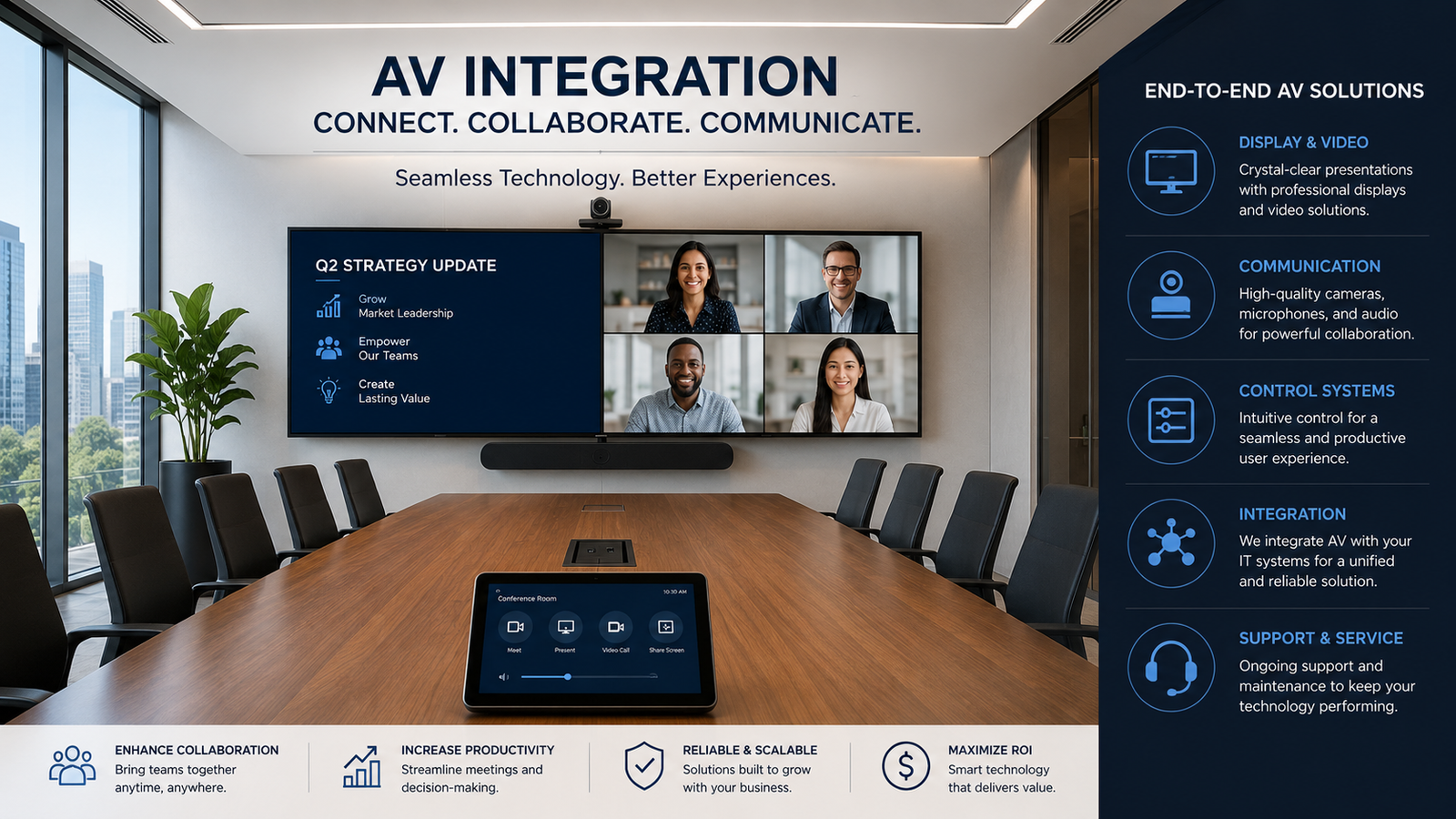
Corporate AV Integration Process: Installation Challenges and Solutions
Workplaces rely on technology to improve communication, collaboration, and productivity. From boardrooms and meeting rooms to training centers and auditoriums, businesses need integrated audio-visual systems that deliver seamless performance. This is where Corporate AV plays a vital role. A well-designed Corporate AV system connects displays, audio devices, cameras, conferencing platforms, and control systems into one unified solution.
The Corporate AV Integration Process involves careful planning, system design, installation, configuration, and testing to ensure every component works together efficiently. Whether an organization is setting up a new office or upgrading an existing workspace, professional Corporate AV Integration helps create reliable meeting environments that support both in-person and hybrid collaboration.
However, installing a Corporate AV system is not always straightforward. Challenges such as cable management, device compatibility, acoustics, network infrastructure, and room layouts can impact performance. This guide explores the complete AV Integration Process, common installation challenges, practical solutions, and how Lightomated delivers customized AV systems for modern businesses.
What is Corporate AV?
Corporate AV refers to the integration of audio, video, display, and control technologies used in professional business environments. It combines hardware, software, and networking to create efficient communication spaces for presentations, video conferencing, digital signage, and collaborative meetings.
A typical Corporate AV system may include LED video walls, interactive displays, projectors, microphones, speakers, cameras, wireless presentation devices, and centralized control systems. Through professional Corporate AV Integration, these technologies work together to provide a seamless user experience.
The Corporate AV Integration Process ensures that every device is properly connected, configured, and optimized according to the workspace requirements. Whether it’s a conference room or a large auditorium, a well-planned Corporate AV installation enhances communication and operational efficiency.
Why is Corporate AV Important?
Businesses today conduct hybrid meetings, client presentations, employee training sessions, and virtual conferences daily. A reliable Corporate AV system enables organizations to communicate clearly without technical interruptions.
Key reasons why Corporate AV is important include:
- Improves collaboration between in office & remote teams.
- Enhances presentation quality with high resolution displays.
- Supports video conferencing with clear audio and visuals.
- Increases employee engagement during meetings and training.
- Creates professional experiences for clients and visitors.
- Simplifies room management through centralized controls.
Professional Corporate AV Integration ensures these systems perform consistently while reducing maintenance and operational issues.
Understanding the Corporate AV Integration Process
The Corporate AV Integration Process consists of several critical stages that ensure successful implementation.
1. Requirement Analysis
The first step is understanding business objectives, room size, seating capacity, and usage scenarios. This helps determine the right Corporate AV solution.
2. Site Survey
Engineers evaluate room dimensions, lighting conditions, acoustics, power availability, and network infrastructure before installation.
3. System Design
Based on the survey, the Corporate AV Integration team designs a solution that includes display placement, speaker positioning, cabling, and equipment selection.
4. Equipment Selection
Choosing compatible hardware is essential. Displays, microphones, cameras, speakers, DSPs, and control systems are selected based on project requirements.
5. Infrastructure Preparation
Cable pathways, electrical connections, mounting structures, and network points are prepared before installation begins.
6. Installation
All AV equipment is installed according to the approved design while ensuring safety, accessibility, and neat cable management.
7. Integration & Configuration
During Corporate AV Integration, devices are connected, programmed, calibrated, and synchronized to work as one complete system.
8. Testing & Commissioning
Every component is tested for video quality, audio clarity, switching performance, and user functionality before handover.
9. User Training & Support
End users receive training on operating the system, while ongoing AMC and technical support ensure long-term reliability.
How Does Corporate AV Work?
A Corporate AV system follows a structured workflow:
Step 1: Input Collection
Microphones, laptops, cameras, and media players send audio and video signals into the system.
Step 2: Signal Processing
Processors and matrix switchers manage routing, scaling, and optimization of content.
Step 3: System Control
Control processors and touch panels allow users to manage displays, audio, lighting, and conferencing from a single interface.
Step 4: Audio Distribution
Digital signal processors optimize sound before it reaches amplifiers and speakers.
Step 5: Visual Display
Content is displayed on LED video walls, projectors, or interactive displays with high clarity.
The Corporate AV Integration Process ensures each stage functions smoothly, delivering a reliable and user-friendly experience.
Corporate AV vs Conventional Setup
| Feature | Corporate AV | Conventional Setup |
| Collaboration | Supports hybrid meetings | Limited to in-room meetings |
| Display Quality | Large LED displays and interactive screens | Basic projector or TV |
| Audio | Professionally optimized | Standard speakers |
| Control | One-touch automation | Manual operation |
| Scalability | Easy to expand | Difficult to upgrade |
| User Experience | Seamless and professional | Basic functionality |
Key Components of Corporate AV
A successful Corporate AV Integration project includes:
- LED Video Walls
- Interactive Flat Panels
- Projectors
- Digital Signage Displays
- PTZ Cameras
- Ceiling & Table Microphones
- Professional Speakers
- Audio DSP Processors
- Matrix Switchers
- AV over IP Solutions
- Wireless Presentation Systems
- Touch Panel Controllers
- Control Processors
- Network Switches
- UPS & Power Management Systems
Each component contributes to the overall performance of the Corporate AV environment and is carefully selected during the Corporate AV Integration Process.
Installation Challenges and Solutions :
Even a well-designed Corporate AV system can face installation challenges if proper planning and execution are not followed. A successful Corporate AV Integration Process requires technical expertise, coordination, and thorough testing to ensure every component works seamlessly.
1. Cable Management : Poor cable management can lead to signal interference, maintenance issues, and an untidy installation.
Solution:
Professional Corporate AV Integration includes structured cabling, cable trays, labeling, and concealed routing to improve aesthetics and simplify future maintenance.
2. Device Compatibility : Organizations often use equipment from different manufacturers, which may create compatibility issues.
Solution:
The Corporate AV Integration Process includes compatibility testing and selecting industry standard equipment that works together without performance issues.
3. Network Infrastructure : Many modern Corporate AV systems rely on IP-based communication. Weak or outdated network infrastructure can cause delays and connectivity problems.
Solution:
Upgrade network switches, implement VLANs where required, and ensure sufficient bandwidth for video conferencing, streaming, and AV-over-IP solutions.
4. Acoustic Challenges : Large meeting rooms and auditoriums often experience echo, sound reflections, or uneven audio coverage.
Solution:
Professional acoustic assessment, proper microphone placement, DSP tuning, and optimized speaker positioning improve speech clarity throughout the room.
5. Display Placement : Incorrect display positioning reduces visibility and affects audience engagement.
Solution:
Display size, mounting height, viewing distance, and room layout should be evaluated during the Corporate AV Integration Process to ensure every participant has a clear view.
6. Power Management : Fluctuating power supply can damage AV equipment and interrupt meetings.
Solution:
Install dedicated power circuits, surge protection, and UPS systems to ensure reliable operation.
7. Future Expansion : Many organizations outgrow their initial AV setup due to business growth.
Solution:
A scalable Corporate AV design allows additional displays, microphones, conferencing systems, and meeting spaces to be integrated without replacing the existing infrastructure.
Benefits of Corporate AV :
A professionally implemented Corporate AV solution provides long-term value beyond basic audio and video capabilities.
Improved Collaboration
Teams can communicate effectively regardless of their location. High-quality audio and video create productive hybrid meetings.
Better Productivity
With automated controls and simplified meeting room operations, employees spend less time troubleshooting technology and more time collaborating.
Enhanced Communication
Crystal-clear audio, high-resolution displays, and professional presentation tools ensure messages are delivered effectively.
Professional Brand Image
A modern Corporate AV environment creates a strong impression during client meetings, investor presentations, and corporate events.
Flexible Workspace
Professional Corporate AV Integration supports multiple room layouts and adapts to changing business requirements.
Lower Maintenance Costs
Using reliable equipment and following best installation practices reduces downtime and long-term maintenance expenses.
Centralized Management
Administrators can monitor, control, and update multiple meeting rooms from a centralized interface, improving operational efficiency.
Facts & Figures :
The demand for Corporate AV continues to grow as organizations embrace hybrid work environments and digital collaboration.
- Modern LED displays can deliver an operational lifespan of up to 100,000 hours, making them a long-term investment.
- Professional AV systems can significantly reduce meeting setup time through automation and centralized control.
- High-quality conferencing solutions improve communication by delivering clear audio and video, even in large meeting spaces.
- AV-over-IP technology enables organizations to distribute audio and video across multiple rooms using standard network infrastructure.
- Energy-efficient LED displays consume less power than many traditional display technologies while providing higher brightness and better image quality.
These advancements make the Corporate AV Integration Process essential for organizations looking to build future ready workspaces.
Why Choose Vallect for Corporate AV Integration?
Vallect specializes in delivering customized Corporate AV solutions that align with your business goals, workspace design, and operational requirements. Our experienced team manages every stage of the Corporate AV Integration Process, ensuring reliable performance and a seamless user experience.
At Vallect, we focus on delivering scalable and future ready Corporate AV solutions that improve collaboration, simplify communication, and maximize return on investment. Whether it’s a single meeting room or a multi location enterprise deployment, our team ensures every project is executed with precision and industry best practices.