
 admin
April 3, 2026
admin
April 3, 2026
How ELV Systems Improve Building Security, Safety & Automation
In today’s rapidly evolving infrastructure landscape, security and automation have become top priorities for modern buildings. From commercial complexes to residential towers, the demand for intelligent systems that ensure safety, efficiency, and seamless control is continuously growing. This is where ELV Systems play a crucial role. Extra Low Voltage (ELV) technology forms the backbone of smart building solutions, offering advanced integration of security, communication, and automation systems. ELV Systems for Security are designed to operate on low voltage while delivering high performance, making them both energy-efficient and highly reliable. As buildings become smarter, ELV solutions are no longer optional but essential for maintaining safety standards and operational efficiency.
What Are ELV Systems?
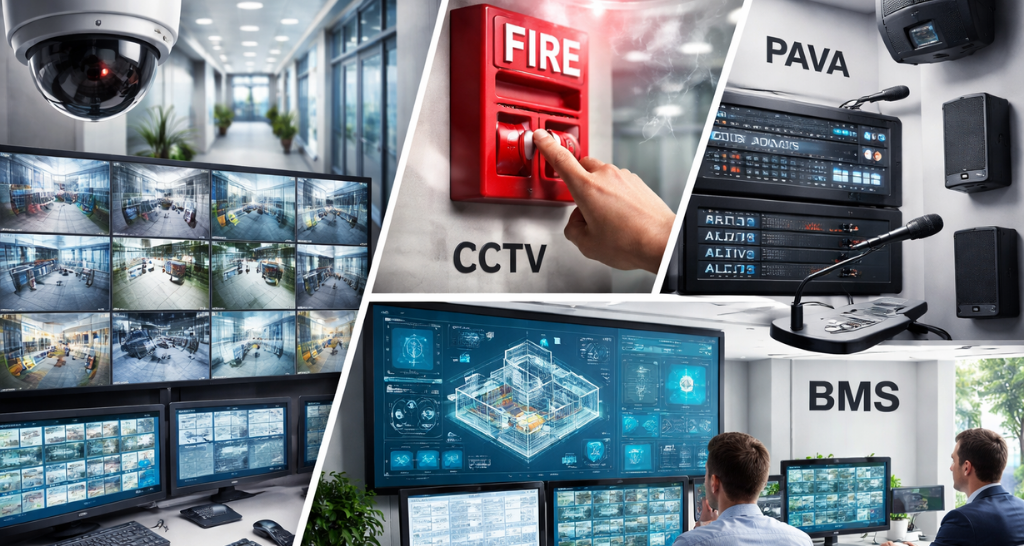
ELV Systems, or Extra Low Voltage systems, refer to electrical systems that operate on low voltage levels, typically below 50 volts. These systems are used for various applications such as security, surveillance, communication, and automation. Unlike traditional electrical systems, ELV Systems are designed to reduce risks associated with high voltage while improving efficiency and performance. ELV Systems for Security include technologies like CCTV surveillance, access control systems, fire alarm systems, public address systems, and building management systems. These systems work together to create a centralized control environment, allowing building operators to monitor and manage all functions seamlessly.
How ELV Systems Enhance Building Security
Advanced Surveillance with CCTV Integration
One of the most important components of ELV Systems is CCTV surveillance. These systems provide real-time monitoring and recording, ensuring that every activity within the premises is tracked. ELV Systems for Security enable high-definition video capture, remote access, and intelligent analytics such as motion detection and facial recognition. This not only helps in preventing unauthorized access but also assists in quick response during security incidents.
Access Control Systems for Restricted Entry
Access control is another key feature of ELV Systems. These systems allow organizations to control who can enter specific areas within a building. Using technologies such as biometric scanners, RFID cards, and keypad entry, ELV Systems ensure that only authorized personnel can access sensitive zones. This significantly reduces the risk of internal and external threats, making the building environment more secure.
Intrusion Detection and Alarm Systems
ELV Systems for Security also include intrusion detection systems that identify unauthorized entry attempts. These systems trigger alarms and notify security personnel instantly, enabling immediate action. When integrated with other ELV components, such as CCTV and access control, they create a comprehensive security network that leaves no gaps.
Improving Safety with ELV Systems
Fire Detection and Alarm Systems
Safety is a critical aspect of any building, and ELV Systems play a vital role in ensuring it. Fire alarm systems are an integral part of ELV infrastructure. These systems detect smoke, heat, or fire at an early stage and alert occupants through alarms and notifications. Early detection helps in minimizing damage and ensures timely evacuation, potentially saving lives. In addition to this, Video Wall Installation further enhances safety by enabling real-time visual monitoring in control rooms and security hubs. Integrated with ELV Systems for Security, video walls display live CCTV feeds, emergency alerts, and critical data on a large, centralized screen, allowing security teams to respond quickly and make informed decisions during emergencies.
Emergency Communication Systems
ELV Systems also include public address and voice evacuation systems that are used during emergencies. These systems provide clear instructions to occupants, guiding them to safety. Effective communication during critical situations is essential, and ELV Systems ensure that messages are delivered instantly and accurately.
Continuous Monitoring for Risk Prevention
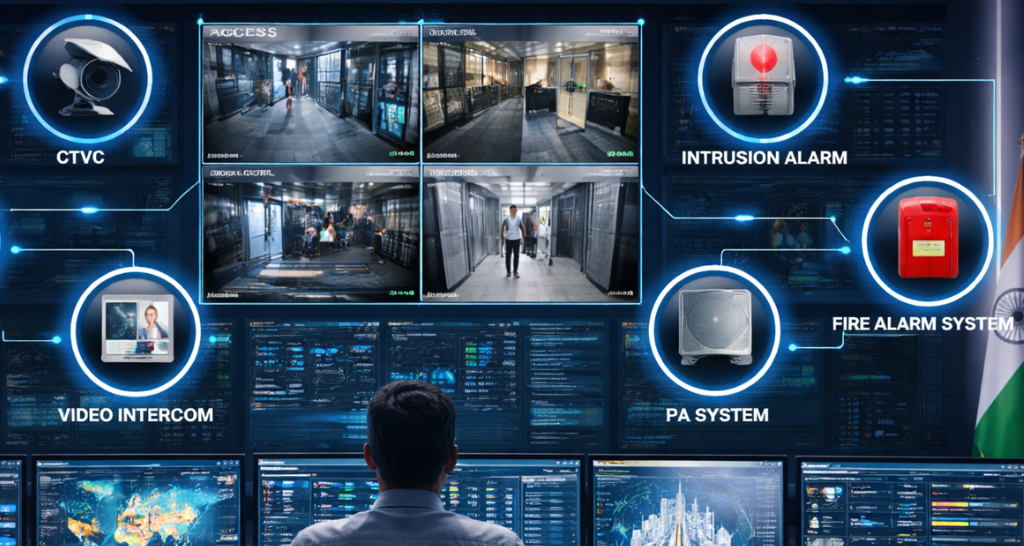
With centralized monitoring capabilities, ELV Systems allow facility managers to keep an eye on all safety parameters. Whether it’s fire alarms, security alerts, or system malfunctions, everything can be monitored from a single control room. This proactive approach helps in identifying potential risks before they escalate into major issues.
Role of ELV Systems in Building Automation
Integration with Building Management Systems (BMS)
One of the biggest advantages of ELV Systems is their ability to integrate with Building Management Systems. This integration allows centralized control of lighting, HVAC, security, and other building operations. ELV Systems make it possible to automate routine tasks, improving efficiency and reducing manual intervention.
Energy Efficiency and Cost Savings
ELV Systems contribute significantly to energy efficiency. By automating lighting and climate control, these systems ensure that energy is used only when needed. This not only reduces operational costs but also supports sustainability goals. Smart automation enabled by ELV Systems helps buildings become more eco-friendly and cost-effective.
Remote Access and Smart Control
Modern ELV Systems offer remote access through mobile devices and web interfaces. This allows building managers to monitor and control systems from anywhere. Whether it’s checking CCTV footage, adjusting lighting, or responding to alerts, everything can be managed remotely, providing unmatched convenience and control. Additionally, integration with a Control Command Center further enhances operational efficiency by centralizing all data, alerts, and system controls in one place. This enables faster decision-making, improved coordination, and real-time response to any security or system-related events.
Benefits of ELV Systems for Security and Automation
Centralized Control and Monitoring
ELV Systems bring all security and automation functions under one platform. This centralized approach simplifies operations and improves response times during emergencies.
Scalability and Flexibility
ELV Systems are highly scalable, making them suitable for both small and large buildings. As requirements grow, additional components can be easily integrated without major modifications.
Enhanced Reliability and Performance
Since ELV Systems operate on low voltage, they are less prone to electrical hazards and failures. This ensures consistent performance and long-term reliability.
Improved User Experience
Automation and smart control features enhance the overall user experience. Occupants benefit from a safer, more comfortable, and technologically advanced environment.
Future of ELV Systems in Smart Buildings
The future of ELV Systems is closely tied to advancements in technologies such as Artificial Intelligence (AI) and the Internet of Things (IoT). These innovations are making ELV Systems smarter and more efficient. Predictive analytics, automated decision-making, and real-time data processing are transforming how buildings operate. ELV Systems for Building Security will continue to evolve, offering enhanced capabilities such as advanced threat detection, real-time surveillance, and intelligent automation. As smart cities become a reality, ELV Systems will play a central role in strengthening building security while shaping the infrastructure of tomorrow.
For inquiries or consultations, you can reach out via phone at +91-7303435333 or email at info@vallect.com. More information is available on their official website www.vallect.com.