admin
December 24, 2025
admin
December 24, 2025
Immersive Spaces Enhanced by AV Integration in 5 Ways
Modern environments are no longer designed only for function or aesthetics. Today, people expect spaces to respond, adapt, and engage them on a deeper level. This shift has led to the growing importance of immersive spaces, where technology and design work together to influence perception, interaction, and emotion.
A key force behind this transformation is AV integration. When audio, visual, lighting, and control systems operate as a unified framework, spaces evolve from static environments into responsive experiences. This blog explores five key ways AV integration shapes immersive spaces and enables them to perform beyond traditional design limitations.
Understanding Immersive Spaces
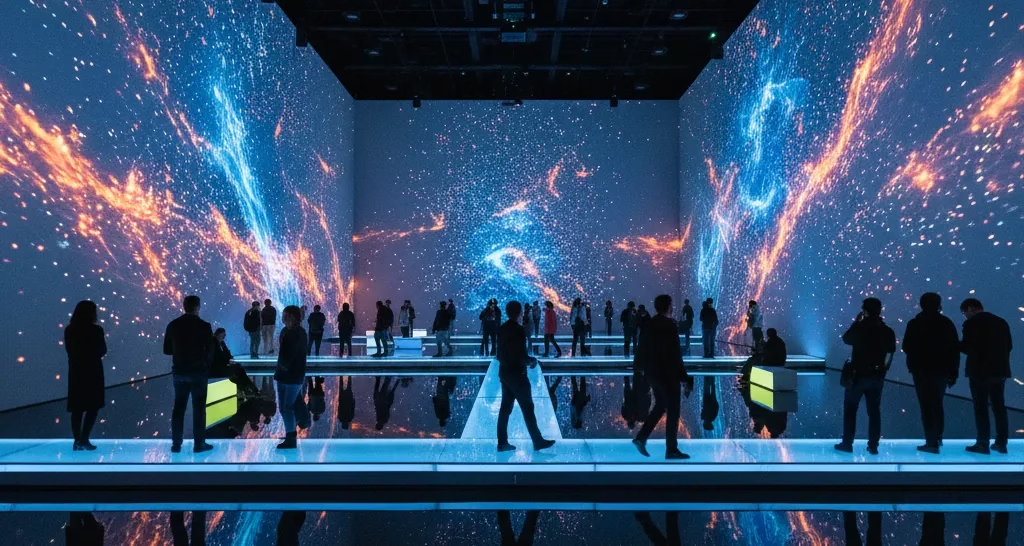
Immersive spaces are environments where people don’t just observe their surroundings, they feel them. The moment someone enters such a space, attention shifts inward. Sound surrounds rather than reaches, visuals guide focus rather than distract, and lighting subtly influences mood and emotion. The environment begins to shape how a person experiences time, movement, and presence.
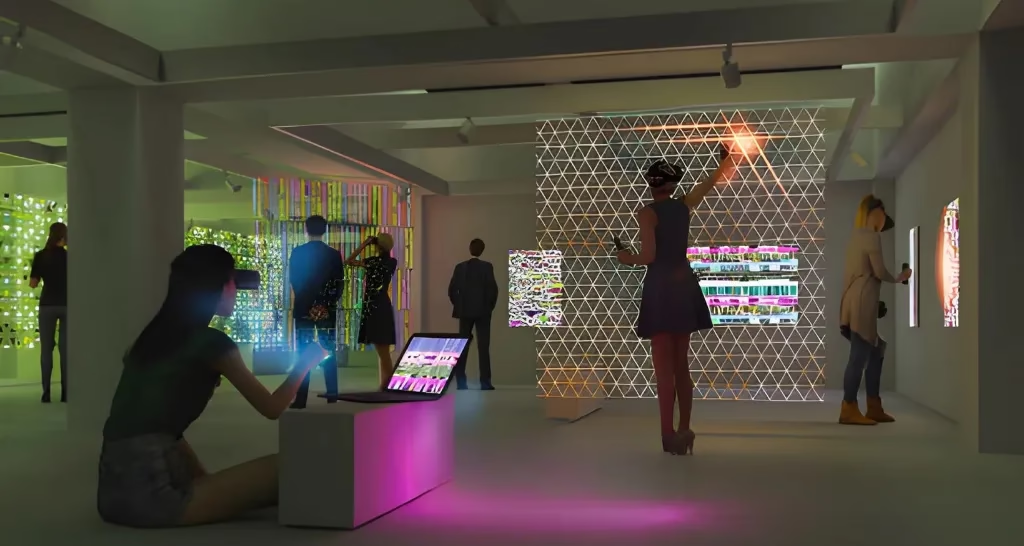
Consider an auditorium during a live performance. As the lights dim, sound spreads evenly across the room, visuals draw the audience’s focus to the stage, and distractions gradually fade away. The audience is no longer just watching; they feel connected to what is unfolding. Similarly, in a museum gallery, immersive spaces allow visitors to step into a story. Directional audio, controlled lighting, and carefully placed visuals make history, art, or science feel immediate and personal rather than distant.
Immersion in these environments is not accidental. It is created when sound, visuals, lighting, and spatial design work together seamlessly. These elements influence how people move through a space, where they pause, what they focus on, and how they emotionally respond. Immersive spaces are designed to make people feel present within an experience, not separate from it.
Reference: ScienceDirect
How Audio Visual Integration Shapes Immersive Spaces
Audio visual integration is what turns a well designed environment into an immersive one. It connects sound, visuals, lighting, and control systems into a single, coordinated framework so that a space responds as one unified experience rather than a collection of separate elements.
In environments such as museums, theatres, auditoriums, and planetariums, this integration ensures that audio feels evenly distributed, visuals remain synchronized, and lighting supports the narrative instead of competing with it. Rather than drawing attention to the technology itself, AV integration allows the space to guide focus, emotion, and movement naturally.
At this point, AV integration removes the sense of separate systems and replaces it with a single, flowing experience. Everything works together effortlessly, allowing immersion to take shape. Technology steps out of focus, letting the experience lead.
Key Role AV Integration plays in Immersive Spaces
1. Sound and Visuals Feel Naturally Connected
In immersive spaces, people should never sense a disconnect between what they see and what they hear. When sound and visuals feel misaligned, attention breaks and immersion fades.
Through thoughtful AV integration, audio follows visual focus naturally. Sound feels anchored to action, visuals hold attention without strain, and audio coverage feels even throughout the space. This alignment allows people to settle into the environment instead of adjusting to it.
2. Interaction Feels Invisible and Effortless
Immersion collapses the moment people struggle with controls. Searching for switches or correcting audio levels shifts attention away from the experience.
AV integration removes this friction. Lighting, sound, and visuals respond smoothly through intuitive controls or automation. The space reacts without instruction, allowing people to stay present rather than problem solving technology.
3. The Space Changes Mood Without Disruption
Immersive spaces are rarely static. They often shift between calm, focus, energy, or reflection.
AV integration allows these transitions to happen seamlessly. Lighting softens or intensifies, sound adapts, and visuals shift tone without physical changes or interruptions. The space feels responsive, not reconfigured.
4. Technology Disappears Into the Design
Visible cables, bulky equipment, or poorly placed screens remind people they are inside a system, not an experience.
Integrated AV design keeps technology discreet. Speakers blend into architecture, displays feel intentional, and interiors remain visually calm. This restraint protects immersion by keeping attention on the experience rather than the infrastructure.
5. Emotional Impact Feels Natural and Lasting
Immersion is remembered emotionally, not technically. People recall how a space made them feel long after they forget how it was built.
AV integration shapes these emotional responses subtly. Gentle audio and lighting create calm, dynamic visuals and sound build energy, and balanced sensory input improves focus and connection. These moments leave impressions that linger beyond the space itself.
How do historic Spaces Become Immersive with Audio Visual Integration
Museums and Exhibitions
Museums use immersive spaces to present narratives through interactive displays, spatial audio, and visual installations that deepen visitor understanding and emotional connection.
Theatres and Auditoriums
Theaters and auditoriums rely on immersive spaces to deliver consistent sound distribution, optimized visuals, and controlled lighting that enhance audience focus and experience.
Planetariums and Educational Venues
Planetariums and learning environments use immersive spaces to create realistic simulations through coordinated projection, audio, and lighting systems that support education and exploration.
Hospitality
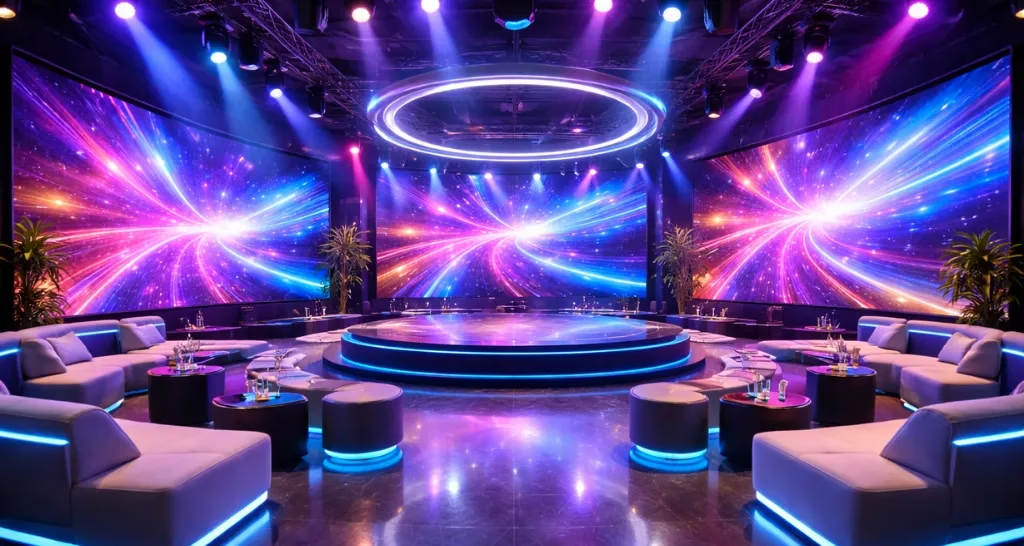
Hotels use immersive spaces to create welcoming environments through coordinated audio, visuals, and lighting that respond intuitively to guest needs and comfort.
Corporate Environments
Meeting rooms, boardrooms, and collaborative areas rely on AV integration to support communication, focus, and seamless interaction across teams.
Residential Spaces
Homes benefit from immersive spaces where entertainment, lighting, and audio systems blend naturally into daily living, enhancing comfort and usability.
Retail and Experience Centres
Immersive spaces guide visitors through curated journeys using synchronized sound and visuals that support storytelling and engagement.

The Importance of Early AV Planning
The effectiveness of immersive spaces depends largely on planning. AV integration should be considered during the design phase rather than added later.
Early planning ensures:
- Proper acoustic alignment
- Optimized display placement
- Scalable system architecture
- Reduced installation conflicts
This approach results in immersive spaces that perform consistently and remain future ready.
Common Challenges in AV Integration
While AV integration shapes immersive spaces effectively, challenges can arise if systems are poorly planned.
Common issues include:
- Overcomplicated control systems
- Inconsistent sound coverage
- Limited scalability
These challenges can be mitigated through user focused design, modular systems, and collaboration between designers and AV specialists.
The Future of Immersive Spaces
As technology evolves, immersive spaces are becoming more adaptive and intelligent. Future developments will focus on:
- Smarter automation
- Centralized system management
- Energy efficient AV solutions
AV integration will continue to be a defining factor in how immersive spaces are designed and experienced.
Immersive spaces represent a shift in how environments are conceived and used. Through thoughtful AV integration, spaces become synchronized, adaptable, and emotionally engaging. When technology works seamlessly in the background, immersive spaces deliver experiences that feel natural, intuitive, and impactful.
AV integration does not simply support immersive spaces, it actively shapes them.