
 admin
September 3, 2026
admin
September 3, 2026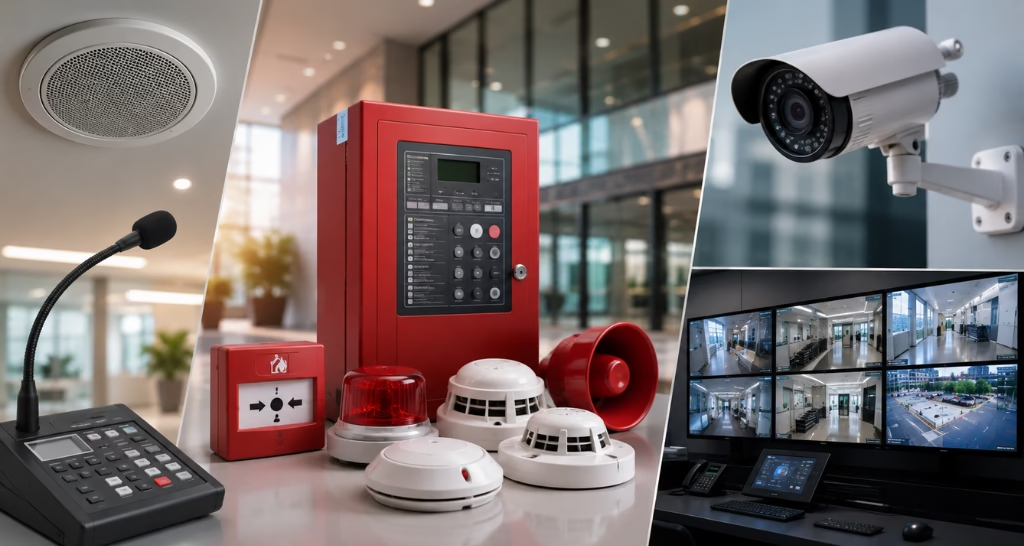
PAVA, Fire Alarm & CCTV Surveillance: What Comprises Your ELV Solutions?
Imagine entering a modern commercial building. The reception area is busy, employees are moving between floors, visitors are arriving for meetings, and dozens of activities are happening simultaneously. everything appears normal until an emergency occurs. a fire alarm needs to alert everyone instantly. The security team needs to know exactly what is happening. Important announcements need to reach people across the building. Cameras need to provide clear visibility of critical areas.
This is where ELV Solutions become essential. extra Low Voltage (ELV) systems bring together multiple technologies that support communication, security, safety, monitoring, and building operations. Among the most important systems are Public Address and Voice Alarm (PAVA), Fire Alarm Systems, and CCTV Surveillance. while these systems perform different functions, integrating them into a coordinated ELV infrastructure can create a safer, more connected, and better-managed environment.
What Are ELV Solutions?
ELV stands for Extra Low Voltage. ELV Solutions refer to technology systems that operate using low-voltage electrical infrastructure and are generally designed for communication, security, safety, automation, and information management. unlike the main electrical systems used to power heavy equipment, ELV systems are focused more on how a building communicates, monitors, protects, and manages information.
Depending on the building and its requirements, an ELV infrastructure may include:
- Fire Alarm Systems
- CCTV Surveillance
- PAVA Systems
- Public Address Systems
- Access Control
- Video Door Phones
- Structured Cabling
- Intercom Systems
- Building Management Systems
- Audio Visual Systems
- Data and Communication Networks
- Intrusion Detection Systems
The exact combination depends on the building type, size, occupancy, security requirements, and operational needs, for this article, let’s focus on three systems that play a particularly important role in building safety and communication: PAVA, Fire Alarm, and CCTV Surveillance.
1. PAVA System: Communication When It Matters Most
Imagine a fire alarm has detected smoke on one floor of a large commercial building. an alarm starts ringing. but is an alarm alone enough? in a large facility, people may not immediately understand what is happening or where they should go. Employees could become confused, visitors may not know the evacuation route, and people in different areas may not hear the same instructions.
This is where a Public Address and Voice Alarm (PAVA) system becomes important. PAVA combines public announcement functionality with voice evacuation capabilities. It allows authorized personnel to broadcast clear voice messages throughout specific areas or across an entire building. during an emergency, instead of relying only on an alarm tone, occupants can receive clear instructions about what they should do and ELV Solutions.
For example: “Attention please. Please evacuate the building using the nearest emergency exit.” this can make emergency communication more direct and understandable.
How Does PAVA Work?
A typical PAVA setup can include:
- Central control equipment
- Microphones
- Power amplifiers
- Loudspeakers
- Emergency microphones
- Zone controllers
- Monitoring and supervision systems
- Backup power systems
The building can be divided into different audio zones. For example, a shopping mall may have separate zones for:
Ground Floor | First Floor | Parking | Food Court | Outdoor Areah, this allows announcements to be targeted to specific areas instead of broadcasting the same message everywhere, PAVA can also be used during normal operations for:
- General announcements
- Visitor information
- Background music
- Event announcements
- Operational communication
- Emergency instructions
2. Fire Alarm System: Detecting Threats Early
A fire can spread quickly, especially in large commercial or industrial buildings. the first step toward protecting occupants is detecting a potential fire as early as possible. a Fire Alarm System is designed to detect indications of fire, such as smoke, heat, or flames, depending on the detectors used. once a detection device identifies a potential fire condition, the system can trigger alarms and notify the appropriate personnel with ELV Solutions.
A typical fire alarm system may include:
- Smoke detectors
- Heat detectors
- Manual call points
- Fire alarm control panels
- Sounders
- Strobes
- Input/output modules
- Monitoring devices
- Emergency interfaces
The system continuously monitors designated areas and communicates detected conditions to the central control panel.
Why Fire Alarm Systems Are Important?
A fire alarm system provides an early warning mechanism. for example, if smoke is detected in a server room, the system can identify the affected zone and initiate the configured alarm response. In a large facility, knowing where a potential fire condition has been detected can help security and E LV Solutions, emergency teams respond more quickly. fire alarm systems can also be integrated with other building systems where appropriate, allowing predefined emergency actions to be initiated according to the building’s safety design.
3. CCTV Surveillance: See What Is Happening
While fire alarms help detect potential fire hazards and PAVA helps communicate instructions, CCTV provides another essential capability:
Visibility.
Security teams cannot physically monitor every entrance, corridor, parking area, reception desk, and restricted zone at the same time. CCTV Surveillance allows security personnel to monitor multiple areas from centralized locations.
Modern CCTV systems can include:
- Fixed cameras
- PTZ cameras
- IP cameras
- Indoor cameras
- Outdoor cameras
- Network video recorders
- Video management software
- Storage systems
- Monitoring workstations
How PAVA, Fire Alarm & CCTV Work Together?
The real value of ELV Solutions comes from understanding that these systems do not necessarily need to operate as completely isolated technologies. consider a simple emergency scenario. a fire detector identifies smoke. the fire alarm system registers the event. the appropriate alarm is activated. the PAVA system broadcasts an emergency announcement. meanwhile, CCTV allows security personnel to visually monitor the affected area and surrounding zones.
Now imagine this happening inside a large shopping mall, airport, hospital, or corporate campus. the combination of detection + communication + visibility provides a more coordinated approach to building safety. this is why ELV system integration is becoming increasingly important in modern infrastructure and A LED video wall delivers vibrant, seamless visuals that capture attention, strengthen brand presence, and create immersive experiences in corporate and commercial spaces with ELV Solutions.
The Role of ELV Integration :
Installing individual systems is only one part of an ELV project. The bigger challenge is ensuring that these systems are properly designed, connected, and managed. an integrated ELV infrastructure can bring multiple technologies together through appropriate interfaces and centralized management.
For example:
Fire Alarm → Detection
PAVA → Communication
CCTV → Visual Monitoring
Access Control → Entry Management
BMS → Building Monitoring
Each system has its own purpose, but together they can support a more connected building environment. the exact level of integration depends on the building’s design, applicable codes and standards, system capabilities, and project requirements and ELV Solutions.
PAVA and Fire Alarm Integration
One of the most important relationships is between the fire alarm and PAVA systems. a fire alarm can detect a potential emergency, while PAVA can provide voice instructions to occupants. for instance, when a fire alarm event occurs in a specific zone, the configured system response may trigger an evacuation message through the PAVA system. instead of occupants hearing only a siren, they can receive understandable instructions. this can be particularly useful in large buildings where occupants may be unfamiliar with the emergency procedures and ELV Solutions.
However, these systems should be designed and integrated according to applicable fire safety requirements and local regulations.
CCTV and Security Monitoring
CCTV can provide security teams with visual information during everyday operations as well as emergency situations. For example, if an unauthorized access alert occurs, security personnel can use associated camera feeds to assess the situation. similarly, during an emergency evacuation, CCTV can help security teams monitor key areas and understand what is happening across the facility. the objective isn’t simply to record video.
It is to provide useful visibility that supports security operations.
Centralized Monitoring for Better Control
Large facilities may have hundreds of cameras, multiple fire alarm zones, several communication areas, and various security systems. managing all of these independently can become challenging. centralized monitoring can help operators view important information from a controlled environment.
A security or command center may include:
- CCTV monitoring screens
- Fire alarm panels
- PAVA controls
- Access control monitoring
- Network infrastructure
- Communication systems
- Incident management tools
This provides operators with a consolidated view of building activity. when designed properly, centralized monitoring can improve situational awareness and make it easier for teams to respond to incidents and ELV Solutions.
ELV Solutions for Different Industries :
Different industries have different ELV requirements.
Corporate Offices
Corporate buildings may require CCTV, access control, PAVA, fire alarm, structured cabling, and AV systems. the focus is generally on employee safety, visitor management, communication, and secure access.
Retail & Shopping Malls
Retail environments require strong surveillance, emergency communication, fire detection, and public announcement capabilities. large facilities may also require zone-based communication and ELV Solutions.
Hospitals
Hospitals have complex operational requirements. ELV systems can support safety, communication, surveillance, access management, and emergency response.
Airports & Transportation
Transportation facilities need highly coordinated communication and security systems because of their large size and high visitor volume.
Industrial Facilities
Factories and warehouses may require extensive CCTV coverage, fire detection, emergency communication, access control, and monitoring infrastructure.
Key Benefits of Integrated ELV Solutions :
A properly planned ELV infrastructure can provide several advantages.
Improved Safety
Fire detection and emergency communication systems can support faster awareness during potential incidents.
Better Security
CCTV and related security systems provide greater visibility across critical areas.
Faster Communication
PAVA allows authorized personnel to communicate information across specific zones or the entire facility.
Centralized Monitoring
Multiple systems can be monitored from designated control locations.
Operational Efficiency
Digital monitoring and centralized controls can make building operations more organized.
Scalability
A well-planned ELV infrastructure can be designed to accommodate future expansion and technology upgrades.
Why System Design Matters ?
The success of an ELV project doesn’t depend only on the equipment selected. system design plays a major role. before implementation, factors such as building layout, occupancy, coverage requirements, communication zones, equipment locations, network infrastructure, power requirements, and future expansion should be evaluated. for CCTV, camera placement needs to provide meaningful coverage. for PAVA, speaker placement and zoning need to support clear communication. for fire alarms, detector selection and placement must follow applicable safety requirements. for integration, systems need appropriate interfaces and configuration and ELV Solutions.
A properly designed ELV system is therefore a combination of technology, planning, engineering, and implementation.
How Vallect Helps With ELV Solutions?
Vallect helps organizations build integrated ELV Solutions that bring safety, security, communication, and monitoring systems together. From CCTV Surveillance and PAVA to Fire Alarm Systems and other ELV technologies, the focus is on designing solutions around the specific requirements of each facility. Rather than treating every system as a standalone installation, the approach considers how different technologies can work together to create a more connected infrastructure. With proper planning, system integration, installation, and support, vallect helps businesses create ELV environments that are reliable, scalable, and suited to their operational and safety requirements with ELV Solutions.
Building a Smarter and Safer Environment With ELV
Modern buildings are becoming increasingly connected. security teams need better visibility. Employees and visitors need clear communication. Facility managers need centralized monitoring. And organizations need systems that can respond effectively when something goes wrong. this is why ELV Solutions have become an important part of modern building infrastructure and ELV Solutions.
PAVA helps communicate. fire Alarm Systems help detect potential fire emergencies. CCTV helps provide visibility. and when these technologies are properly designed and integrated, they can work together as part of a broader building safety and security ecosystem.he goal is not simply to install more technology, the goal is to create a building where technology works quietly in the background until the moment it is needed most and ELV Solutions.