
 admin
June 16, 2026
admin
June 16, 2026
How Do Wireless Microphones Enable Corporate Meetings?
Modern corporate meetings are no longer limited to small conference rooms and basic communication setups. With hybrid meetings, boardroom discussions, training sessions, and large-scale presentations becoming common, clear communication has become a major requirement. Poor audio quality can reduce engagement, create misunderstandings, and affect the overall meeting experience.
Wireless microphones have become an important part of modern meeting environments by providing flexibility, mobility, and reliable sound transmission. Unlike traditional wired microphones, they allow presenters, speakers, and employees to move freely while maintaining consistent audio quality.
Today, businesses are adopting advanced corporate meeting audio solutions to improve collaboration and ensure every participant can hear and communicate effectively. Whether it is a small meeting room or a large corporate auditorium, wireless audio systems for meetings help create a smoother and more professional communication environment.
What Are Wireless Microphones?
A wireless microphone is an audio device that captures a speaker’s voice and transfers the audio signal to a receiver without using physical cables. It uses radio frequency (RF), digital transmission, or other wireless technologies to send sound signals between the microphone and the audio system.
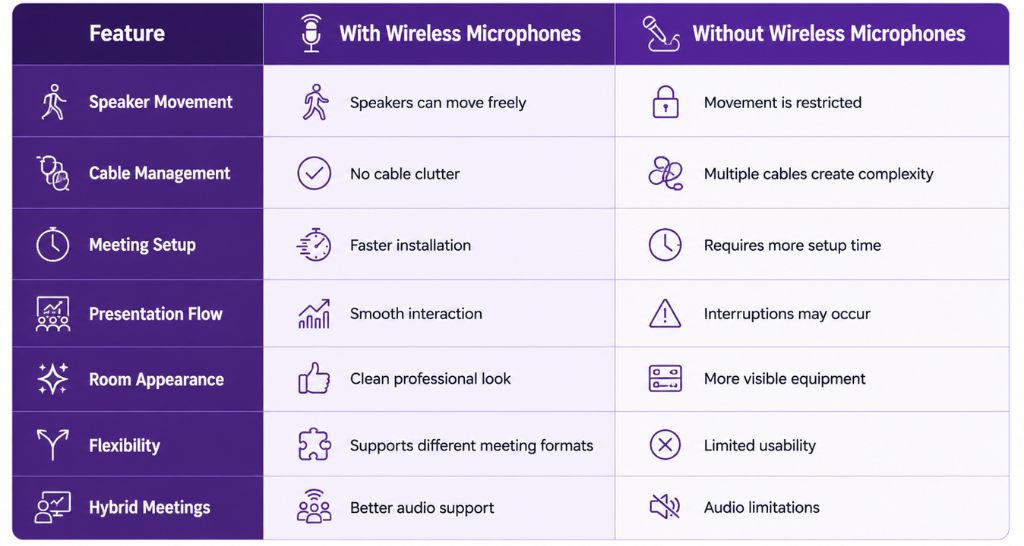
Traditional microphones require cables connected directly to amplifiers, mixers, or speakers. While they can deliver stable audio, they limit movement and create cable management challenges. Wireless microphones remove these limitations by allowing speakers to move naturally around the room.
In corporate environments, wireless microphones in conference rooms are used for presentations, leadership meetings, training sessions, webinars, and video conferences. They provide a cleaner setup while supporting multiple speakers and different meeting formats.
Modern wireless microphone systems are designed with features such as noise reduction, frequency management, rechargeable batteries, and high-quality audio transmission. These features make them suitable for professional corporate spaces where communication clarity is essential.
Why Are Wireless Microphones Important for Corporate Meetings?
Communication is the foundation of every successful corporate meeting. Even with advanced displays and video conferencing tools, poor audio can impact productivity and participant engagement.
Wireless microphones improve meetings by providing:
1. Better Speaker Mobility
Presenters can walk, interact with audiences, and control presentations without being restricted by cables. This is especially useful during training sessions and large presentations.
2. Improved Meeting Participation
Employees can easily speak from different locations inside the room without moving toward a fixed microphone setup.
3. Professional Meeting Experience
A clean, cable-free environment creates a more organized and modern workplace atmosphere and Video wall delivers high-impact visuals with seamless display for events, control rooms & branding..
4. Support for Hybrid Meetings
Many companies now combine physical and virtual meetings. High-quality microphones ensure remote participants receive clear audio.
Using corporate meeting audio solutions with wireless technology helps organizations create better communication experiences. Similarly, wireless audio systems for meetings allow businesses to adapt their meeting spaces according to different requirements.
How Do Wireless Microphones Work?
A wireless microphone works by converting a speaker’s voice into an audio signal and transmitting it wirelessly to a receiver. The receiver then sends the signal to an audio processor, amplifier, or speaker system.
Working Process:
- Sound Capture : The microphone capsule captures the speaker’s voice and converts sound waves into electrical signals.
- Signal Processing : The transmitter processes the audio signal and prepares it for wireless transmission.
- Wireless Transmission : The transmitter sends the audio signal through radio frequency or digital wireless technology.
- Signal Reception : The receiver collects the transmitted signal and converts it back into an audio output.
- Audio Distribution : The processed sound is sent to speakers or conferencing systems.
Key Components/Technologies Used in Wireless Microphones Systems :
1. Microphone Transmitter
The transmitter captures voice signals and converts them into wireless data. It may be built into handheld microphones, lapel microphones, or headset microphones.
2. Receiver Unit
The receiver collects signals from the microphone and transfers them to the audio system. Professional receivers support stable connections and reduce interference.
3. Frequency Management Technology
Modern systems use frequency selection technology to avoid interference from other wireless devices operating nearby.
4. Audio Processor
The processor improves sound quality through filtering, equalization, and noise reduction.
5. Rechargeable Battery Systems
Many corporate microphones use rechargeable batteries to support long meetings and reduce maintenance requirements.
6. Integration With AV Systems
Wireless microphones are often connected with speakers, amplifiers, conferencing solutions, and control systems.
Proper wireless microphones installation for offices ensures the system works efficiently by considering room size, speaker placement, and audio requirements.
Benefits of Wireless Microphones for Corporate Meetings
1. Enhanced Flexibility
The biggest advantage of wireless microphones is freedom of movement. Speakers can interact naturally without worrying about cables.
2. Better Collaboration
Employees can participate easily, making meetings more interactive and productive.
3. Reduced Installation Complexity
Wireless setups reduce the requirement for extensive cabling, making installation and maintenance easier.
4. Improved Room Aesthetics
A cable-free meeting room looks cleaner and more professional.
5. Supports Different Meeting Types
From small discussions to large conferences, wireless systems can adapt to different environments.
Facts & Figures:
- According to workplace communication studies, poor audio quality is one of the biggest reasons for reduced engagement in virtual and hybrid meetings.
- Modern digital wireless systems can support multiple microphone channels simultaneously.
- Businesses using integrated AV solutions often experience smoother meeting operations due to better audio clarity.
| Metric | Impact |
|---|---|
| 1 Major Challenge | Poor audio quality reduces engagement in virtual & hybrid meetings |
| Multi-Channel Support | Modern digital wireless systems support multiple microphone channels simultaneously |
| Better Meeting Performance | Integrated AV solutions improve audio clarity and meeting efficiency |
| Communication Quality | Clear audio enables smoother discussions and collaboration |
| Meeting Experience | Wireless systems provide flexible and professional communication setup |
How Vallect Helps ?
Vallect provides professional AV and communication solutions designed to improve corporate meeting experiences. The company helps organizations select, install, and integrate suitable audio systems based on their workspace requirements.
From conference rooms to large corporate environments, Vallect focuses on delivering reliable audio performance through properly planned solutions. Their approach includes understanding room acoustics, selecting suitable equipment, and ensuring smooth system integration.
With advanced wireless microphones in conference rooms, businesses can improve communication, reduce technical interruptions, and create a more efficient meeting environment.
Vallect also supports wireless microphones installation for offices by ensuring proper placement, configuration, and performance optimization for long term use.